
Under Joe Biden, the United States begged Saudi Arabia for oil and told American energy producers they were the climate enemy. Under Donald Trump, we just signed a deal to build El Salvador’s first nuclear power plant — and blocked China from doing it instead.
Small country. Big deal.
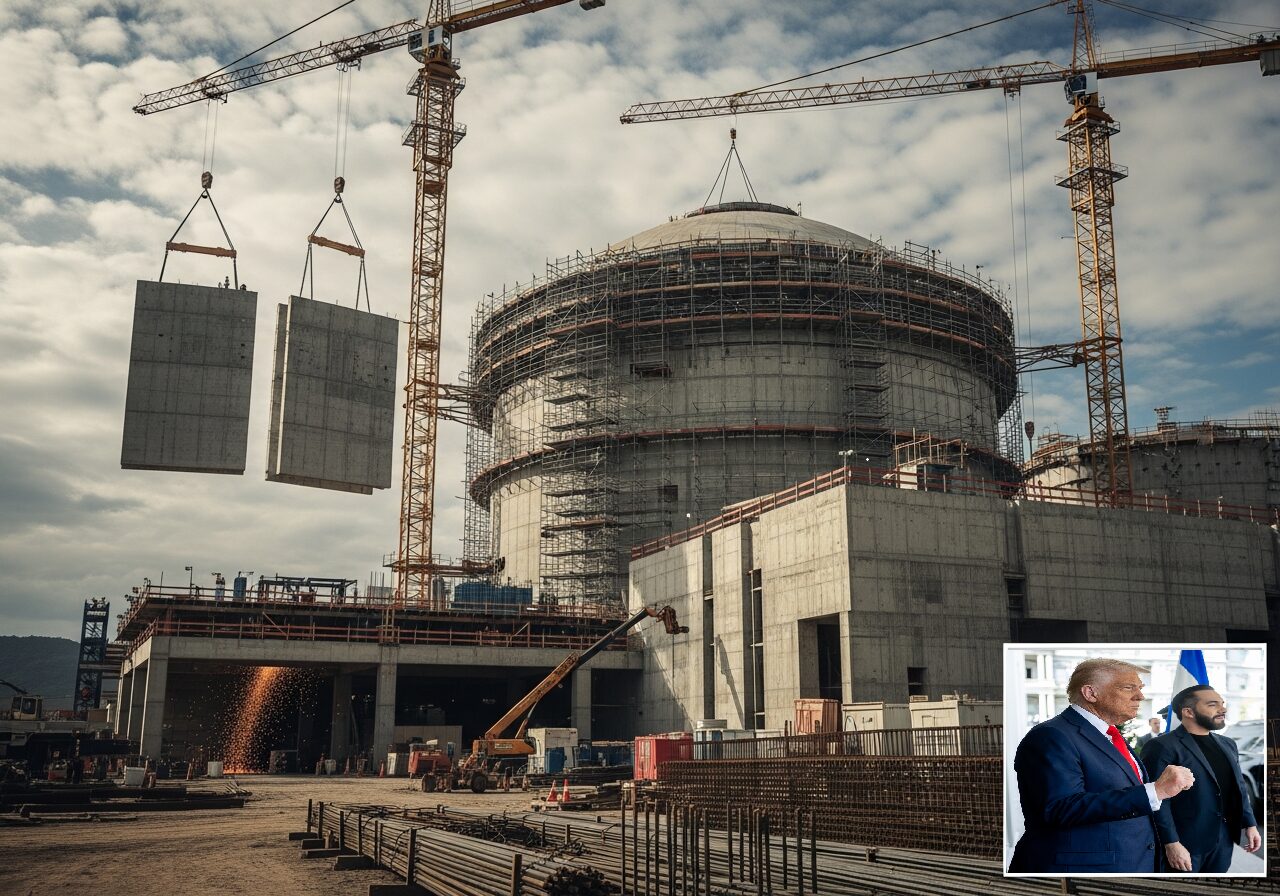
El Salvador just became the first Central American nation to partner with the United States on nuclear energy. The agreement — signed this week at the U.S. Nuclear Energy Institute — commits to a research reactor within seven years and nuclear power supplying 26% of El Salvador’s electricity by 2050. American workers and companies are positioned to build it, fuel it, and train the 400 Salvadoran nuclear specialists the government has committed to developing by 2030. This isn’t foreign aid. It’s American labor and American expertise going to work under contract.
The strategic context: China dominates Latin American energy investment — solar, wind, transmission infrastructure. But China has never sold a nuclear reactor outside of Pakistan. Russia’s Rosatom has been losing ground — Romania canceled its Russian nuclear deal in 2020 in favor of American technology. El Salvador follows the same pattern. Every nation that signs with us is a nation that didn’t sign with Beijing or Moscow.
Trump signed an executive order directing the State Department to pursue at least 20 new nuclear cooperation agreements by January 2029. El Salvador is one. Hungary, Slovakia, and Saudi Arabia are already in progress.
CBS News wants you to know this deal is suspicious because it came alongside El Salvador housing our deportees in the CECOT mega-prison. America gets deportees returned, blocks Chinese energy expansion, creates American jobs, and builds a stable ally — and the complaint is that we got too much out of the deal.
The 20-agreement target tells you what the endgame looks like. If Trump hits it — or gets close — American nuclear companies will have locked up markets across Central America, Eastern Europe, and the Gulf before China or Russia can respond. The country that signs the early deals writes the technology standards, trains the technical specialists, and controls the fuel supply contracts for decades.
The small modular reactor opportunity is the specific thing worth watching. El Salvador’s timeline and scale make it ideal for SMR deployment — the U.S. has ten companies DOE is fast-tracking for SMR development this year. If El Salvador becomes the first international SMR showcase — reactor built on time, grid performing as promised — it becomes the sales brochure for every developing nation currently choosing between American, Chinese, and Russian nuclear options. The global SMR market is projected above $300 billion by 2040. The country that locks up the early showcase markets writes the standards for everyone who comes after.
The training pipeline is the soft power story that never gets told. Four hundred Salvadoran nuclear specialists trained to American standards by 2030 means 400 technical professionals with American certifications and American professional networks running El Salvador’s critical energy infrastructure. This is how lasting American influence actually works — not through aid payments, but through the professionals who keep a country’s lights on knowing exactly who trained them.
Biden’s approach to the same region was foreign aid payments and lectures about democratic governance. Trump signed a nuclear deal and got deportees back on the same day.
One of those approaches creates lasting influence. The other creates dependency and resentment.
El Salvador won’t be the last. Watch for the next 123 Agreement announcement — it will come from a country where China or Russia was the leading alternative before this week