

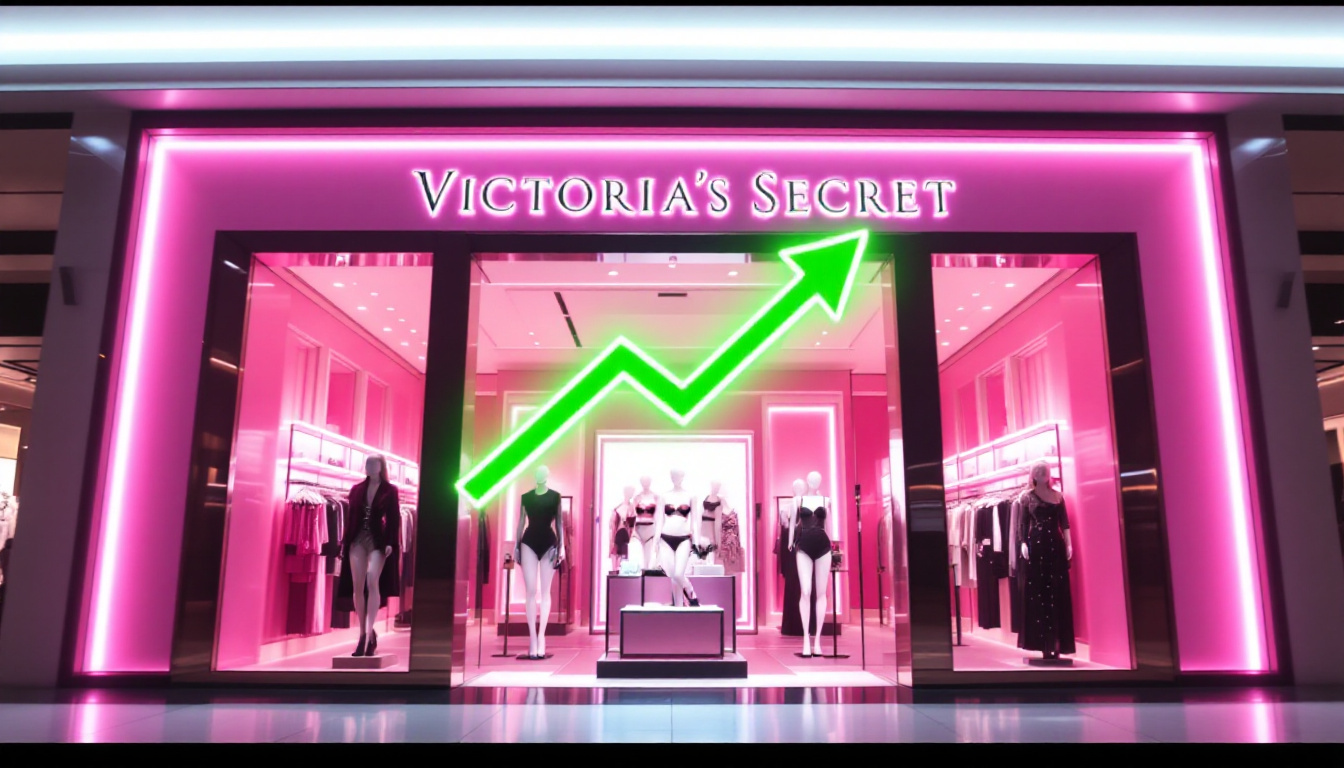
Victoria's Secret did the unthinkable in corporate America — it admitted the woke rebrand was a disaster, brought back the supermodels, and watched its stock nearly double. Turns out when you stop lecturing your customers and start selling them what they actually want, money follows. Shocking, I know.
Who could have possibly predicted that replacing Adriana Lima with Megan Rapinoe and a lineup of "body positive" models wouldn't move lingerie off the shelves? Everyone. Literally everyone predicted that.
Let's rewind. A few years ago, Victoria's Secret decided it needed to get with the times. Out went the Angels. In came plus-size models, older models, and yes, even a transvestite — because nothing says "intimate apparel" like a lecture on gender theory. The company's stock, which had been trading at $57 a share after its 2021 spin-off, cratered to less than $15.00 by 2023. The brand was bleeding out, weighed down by the founder's ties to Jeffrey Epstein, activist investors who wouldn't stop fighting, and a marketing strategy that was designed to please Twitter activists instead of actual customers.
Then came CEO Hillary Super. Hired in August 2024, Super — the former CEO of Anthropologie and Savage X Fenty — became the first female CEO of the new public company and immediately started doing what any sane person would do: she brought sexy back. Classic beauty. Traditional models. The stuff that built a billion-dollar brand in the first place.
The results? Not subtle. Victoria's Secret just posted Q1 earnings of $0.60 per share — nearly double what Wall Street expected. Net sales jumped 15% to $1.56 billion, topping guidance. Comparable sales grew for the fourth consecutive quarter. New customer acquisition among Gen-Z is seeing double-digit growth. The stock rocketed from around $40 to an all-time high of $80 per share.
Super even changed the stock ticker from VSCO to VSXY. Let that sink in. She told Fortune, "VSXY is recognizable and aligns with our strategy and the progress we've made. It reflects our conviction and confidence in this work. We're owning who we are, and we're proud of it."
Owning who they are. What a concept.
Management raised its full-year outlook by $120 million above street estimates, now forecasting net sales of $7.03 billion to $7.13 billion, up from prior guidance of $6.85 billion to $6.95 billion. Adjusted operating income guidance was hiked to $550 million to $580 million — up over $100 million from the prior range. And that's despite eating a $90 million hit from tariffs.
Super described her strategy as a "promo-detox" — cutting the endless markdowns and replacing "promotional offers with compelling emotional messaging." In other words, she stopped treating the brand like a clearance rack and started treating it like a brand again. As she told Fortune, "That natural human reaction is to want to stay out of controversy." She chose the radical path of selling products people want to buy.
We've been saying it for years. Get woke, go broke. But now we've got the mirror image playing out in real time: go back, get stacks. Every Fortune 500 CEO sitting in a boardroom wondering whether to keep their DEI department should be printing out Victoria's Secret's earnings report and taping it to the wall.
This isn't complicated, folks. Customers wanted supermodels, not sermons. They wanted fantasy, not activism. Victoria's Secret nearly destroyed a legendary brand chasing applause from people who were never going to buy a push-up bra in the first place. Now they're back, the stock is soaring, and the lesson is right there for anyone willing to learn it.
Bet you won't hear this story on MSNBC, as reported by Breitbart and Louder with Crowder.