

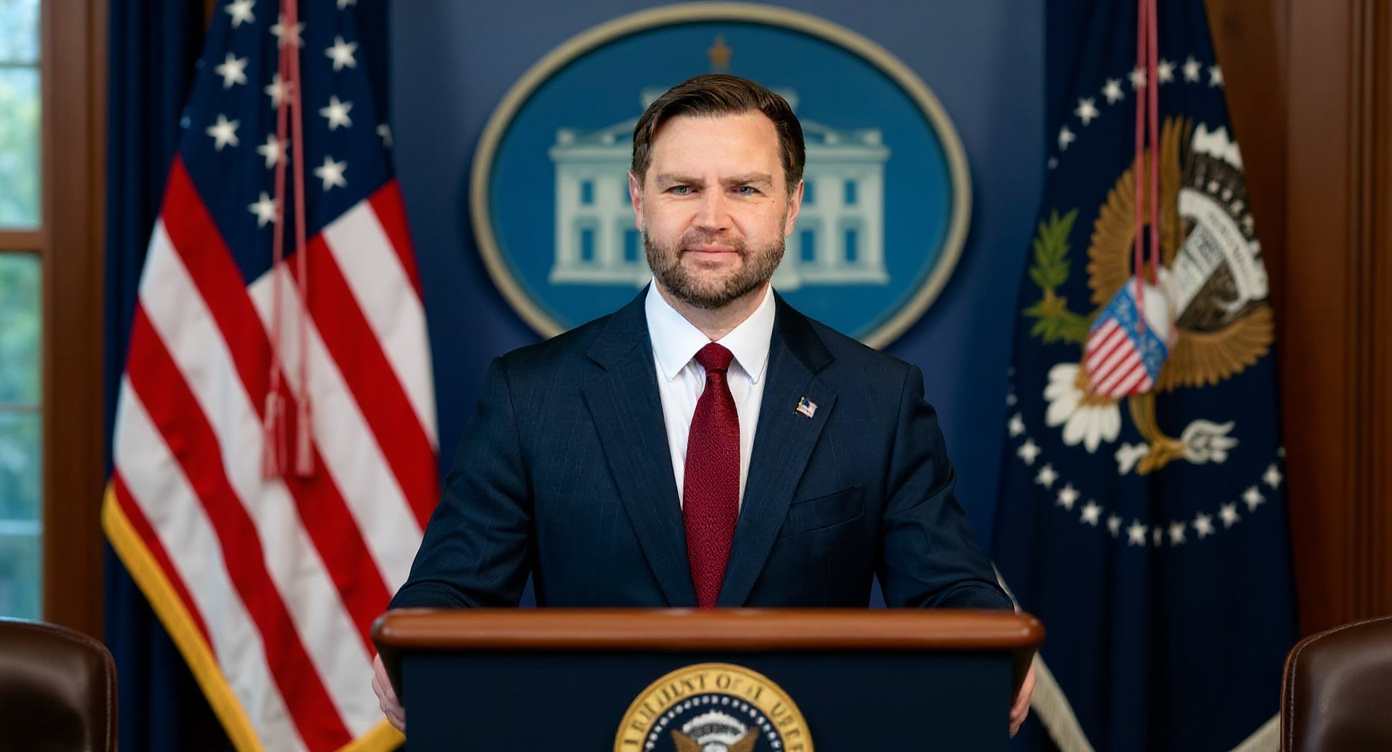
Vice President JD Vance stepped to the podium during a Fraud Task Force briefing, glanced at his notes, and delivered the line that broke the internet: "I have notes here that I'm supposed to take questions from CNN and POLITICO... anybody from CNN or POLITICO here? No? Alright!"
The room laughed. The internet laughed harder.
This came in the middle of a media meltdown over the White House's decision to revoke press access for CNN, Politico, and MSNBC from certain briefings — a decision the Washington press corps immediately branded a constitutional crisis. Journalists who spend their days accusing the administration of authoritarianism suddenly discovered that not getting a front-row seat to ask gotcha questions was, in their professional estimation, the end of democracy.
Vance's response was surgical. He didn't argue about press freedom or cite legal precedent. He just pointed out the empty chairs where the banned outlets were supposed to sit and moved on with his day. The joke worked because the premise is true — the outlets screaming loudest about access are the ones whose audiences have been shrinking for years.
Secretary of State Marco Rubio reinforced the point when pressed by NBC, noting that no media outlets had been "shut down" and that every one of them remained free to report whatever they wanted. The distinction matters. Losing a reserved seat in the briefing room isn't censorship. It's a seating chart adjustment.
The timing made it better. Vance wasn't riffing at a rally or posting on social media. He was in the middle of announcing that 750,000 suspected Obamacare scammers had been removed from the rolls — the latest result of his Fraud Task Force working with CMS Administrator Dr. Mehmet Oz. The actual news of the day was a government agency catching fraud at industrial scale. The press wanted to talk about themselves.
That's the pattern. President Trump attends the United Nations General Assembly. Vance announces concrete policy results. The media covers neither, choosing instead to run forty-eight hours of programming about whether reporters are being oppressed. The story they want to tell is always the story where they're the main character.
The objection from the press freedom crowd is that restricting briefing access sets a dangerous precedent. But these same outlets spent four years lobbying social media companies to suppress stories they didn't like and cheered when the previous administration coordinated with platforms to flag "misinformation" — which turned out to mean "things that were true but inconvenient." Their commitment to open information flows is, to put it gently, situational.
What Vance understood — and what made the moment land — is that the media's power depends on the audience believing reporters are essential. The outrage over the "ban" only works if the public sees these journalists as brave truth-tellers being silenced. If the public sees them as self-important hall monitors who got their hall pass revoked, the outrage becomes the joke.
Vance didn't just respond to the controversy. He made the controversy look small.
750,000 fraudulent enrollments pulled from the system. One joke about empty chairs. Only one of those made the news cycle.