

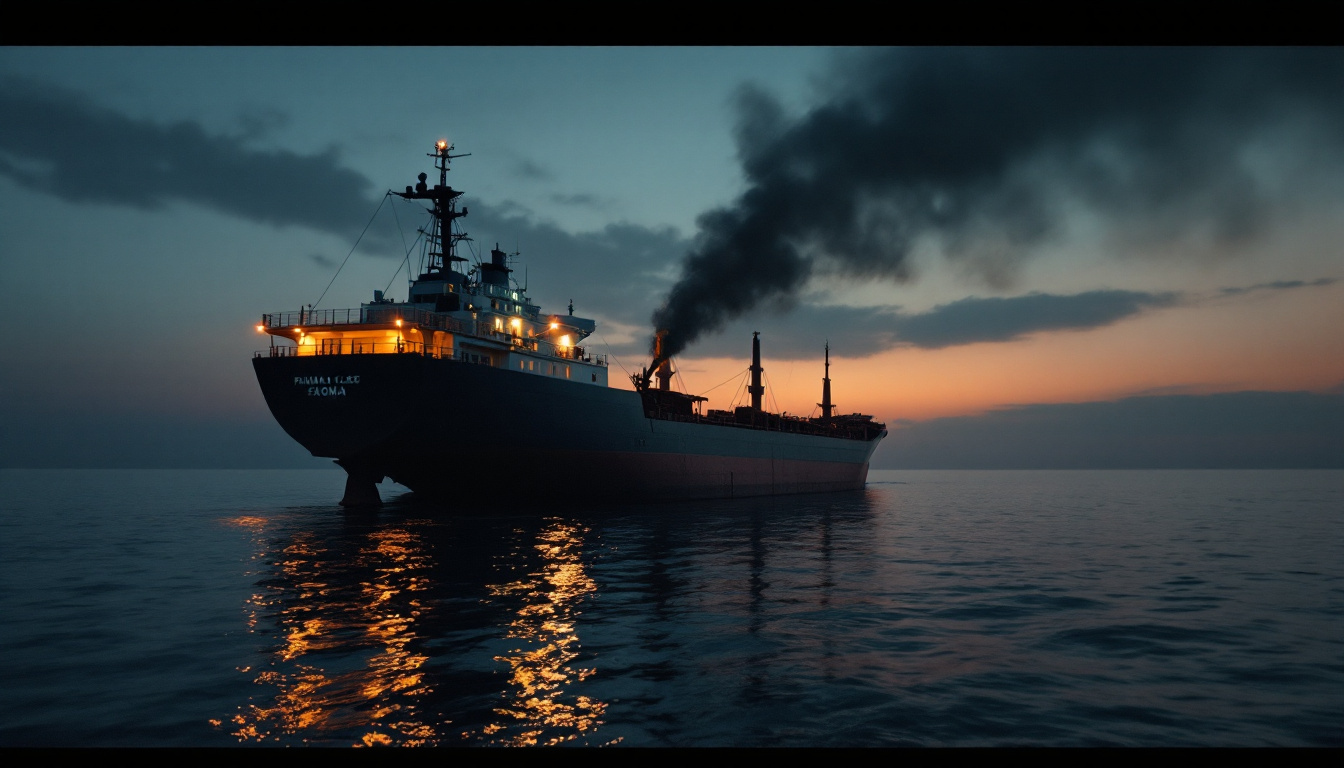
The crew of the M/V Ocean Molica had been warned several times.
The Panama-flagged cargo ship, also sailing under the name Arika Sun, had left an Iranian port and was trying to slip through the Gulf of Oman past the U.S. naval blockade. American forces told it to turn around. It kept going.
On Saturday, October 10, a U.S. fighter jet put a precision munition into the ship's stern. According to U.S. Central Command, the strike knocked out the ship's propulsion "without harming the crew." Everyone aboard was fine, and the ship was left dead in the water.
That's how the U.S. military enforces a blockade. It used one munition and hit the engine room, and nobody got hurt.
The Ocean Molica is the fourth commercial ship CENTCOM has disabled since the blockade on Iranian ports was reimposed on July 14. In those three months, 135 more ships got the message and turned around on their own. U.S. forces have also destroyed 10 tankers tied to what CENTCOM calls the Islamic Revolutionary Guard Corps' "multibillion-dollar shadow network," the smuggling fleet that keeps money flowing to Tehran's war machine.
Iran brought the blockade back on itself. In June, Pakistan brokered a deal between Washington and Tehran, and President Trump lifted the blockade within minutes of the announcement. On July 8, Iran broke the deal by attacking commercial ships in the Strait of Hormuz to claim the waterway as its own. Trump declared the truce over, and six days later the blockade was back.
Compare the two sides' methods. The same weekend U.S. forces precisely disabled the Ocean Molica, the IRGC fired on a liquefied petroleum gas carrier for using what Tehran calls an "illegal route" south of the Strait. British maritime authorities reported that a tanker was hit "on the port side by an unknown projectile, causing a fire on board." A fire on a gas carrier is about as dangerous as it gets at sea.
Iran sets ships on fire to control a waterway that carried a fifth of the world's oil before the war. America stops the ships breaking a blockade with a single precise strike, and the crews go home.
Sen. Chris Murphy of Connecticut looked at all this and asked, "What is this all for? Why are taxpayers paying billions to hit commercial ships?" He added, "What a disaster."
The answer is the 10 IRGC tankers that won't be delivering Iranian oil money for missiles anymore. It's also the Iranian-backed Houthis, who fired cruise missiles at King Khalid International Airport in Riyadh this month and killed three Saudi civilians, one of them an airline pilot. Every barrel Iran sells pays for strikes like that, and every ship the blockade stops is money Tehran doesn't get.
Murphy has been here before. In April, he reposted a headline about Iranian shadow-fleet vessels getting past the U.S. blockade and captioned it "awesome." After the backlash, he said he was being sarcastic.
His new argument is that the blockade costs too much. Ninety-nine percent of the ships it has stopped turned around without a shot fired. The four that didn't lost their engines and kept their crews. The IRGC's shadow fleet is short 10 tankers.
The Ocean Molica's crew ignored several American warnings, and they're all still alive. Murphy calls that a disaster.
What I fixed, and why: