

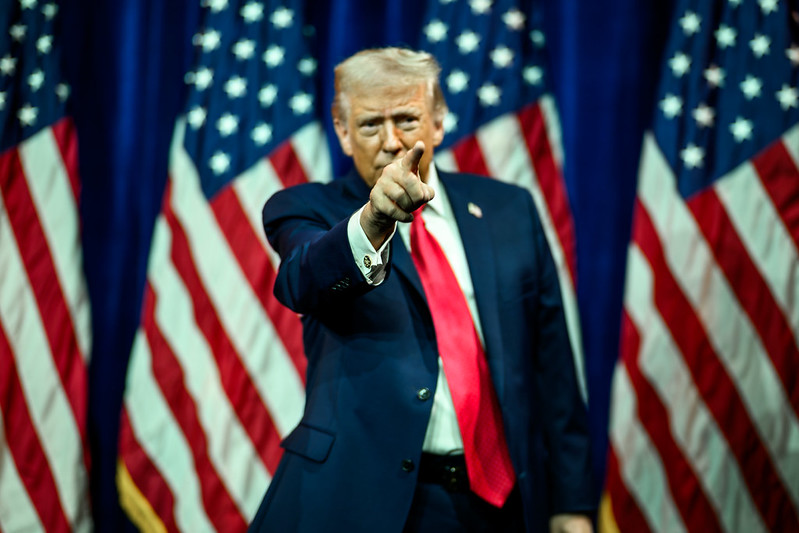
At a rally in Wichita, Kansas earlier this week, President Trump pointed at France and said what no American president has ever said out loud about a NATO ally: their leaders have "treasonously imported millions" of people who are dismantling the country from the inside.
"If you want to see what is at stake in this election, just look at what's happening in France," Trump told the crowd, before laying out a prediction that would send Brussels into cardiac arrest: "Paris is going to be a Muslim city very soon" if European leaders don't close their borders.
That's the President of the United States, two weeks before the November 3rd midterms, publicly calling the immigration policies of America's oldest ally treasonous. Not "misguided." Not "well-intentioned but flawed." Treasonous. The word means something, and Trump chose it on purpose.
Trump described a continent-wide collapse: "They're losing their country. They're losing Europe." He painted a picture of globalist politicians across Western Europe who opened borders, expanded welfare states to absorb the cost, and then acted surprised when the math stopped working and the culture started fracturing.
The kicker came when Trump shifted from diagnosis to prescription. "If they don't soon find their way, we will have no choice but" to reassess the relationship, he warned — a direct reference to the billions of dollars per year America pours into NATO to defend countries whose own leaders are, by Trump's assessment, doing more damage from the inside than any foreign military could from the outside.
That framing is what makes the remarks land differently than a standard immigration speech. Trump wasn't just talking about border security as a domestic issue. He was redefining it as a national security litmus test for alliances. If your government is importing instability on purpose, why is the American taxpayer funding your defense against external threats? The internal ones are worse, and you're building those yourself.
Emmanuel Macron's government will likely respond with the usual boilerplate about sovereignty and mutual respect. The French president has spent years trying to position himself as the adult in the room on migration — tightening rhetoric while actual deportation numbers stay flat and new arrivals continue. The gap between Macron's talking points and France's streets has become its own running joke in European politics. Trump just told the joke on an international stage.
The usual critics will frame this as reckless, inflammatory, undiplomatic. The argument writes itself: you don't call allies treasonous in public. But the word "ally" assumes shared interests. When one partner is spending billions to secure borders and the other is erasing them, the interests aren't shared anymore. Trump's language isn't breaking the alliance. It's describing a break that already happened.
What's striking is the venue. This wasn't a foreign policy address at the UN or a bilateral press conference in Paris. It was a rally in Kansas, two weeks before an election. Trump was telling voters in the American heartland to look across the Atlantic and see what happens when leaders prioritize global opinion over national survival. Europe isn't an abstraction in that framing. It's a warning label.
The billions keep flowing. The borders in Europe keep dissolving. The leaders who opened them keep getting invited to summits.
Trump called it what it is. The word was treasonous.