
Eighty-eight percent. That's the share of students at Northwestern University who admitted, in a 2025 study, that they pretended to hold more progressive political views to improve their academic prospects. Not because they were persuaded. Not because the evidence changed their minds. Because they understood, clearly, that disagreeing with their professors was a career risk.
Starting July 1, 2027, the federal government is going to ask why.
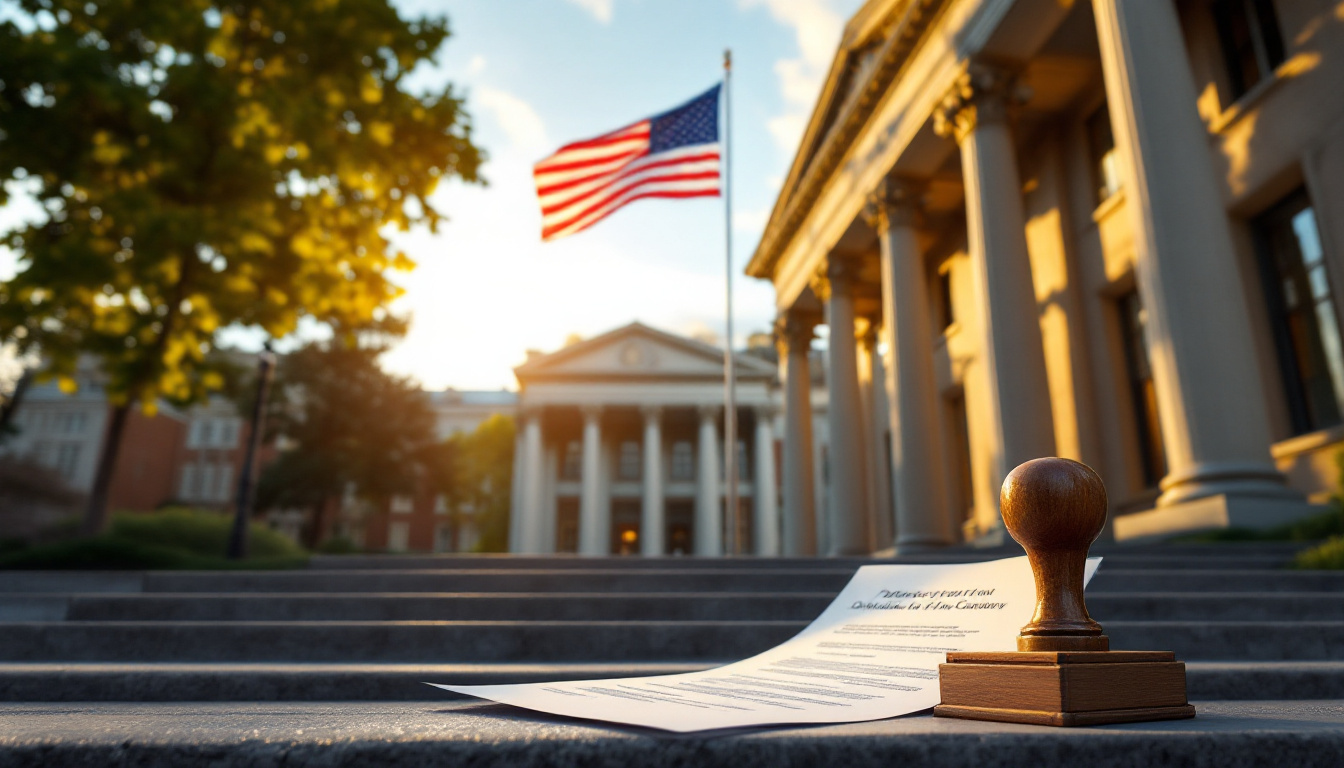
The Trump administration finalized new accreditation rules — published October 30, 2026 — that will require the agencies responsible for evaluating America's colleges and universities to assess whether institutions actually expose students to a range of viewpoints. Accreditation isn't some bureaucratic footnote. It's the gate that determines which schools qualify for federal student loans and grants. Lose accreditation, lose the money. The Education Department just attached intellectual diversity to the key that opens the vault.
Trump telegraphed this during a 2023 campaign speech when he called the accreditation system his "secret weapon" and promised to "reclaim our once great educational institutions from the radical left." He went further: "fire the radical-left accreditors that have allowed our colleges to become dominated by Marxists, maniacs and lunatics." The press treated it as rally rhetoric. The final rule published last month suggests it was a blueprint.
Ellen Keast, Communications Director for the Education Department's Undersecretary, told reporters the new regulations are "a commonsense step toward restoring intellectual diversity by ensuring accreditors evaluate whether institutions are creating an environment where differing perspectives can be debated openly and fairly." She added that "the regulations do not mandate any specific policies" — meaning colleges aren't being told what to teach. They're being told they can't punish students for thinking differently.
The rules also make it easier to create new accrediting agencies and allow schools to switch accreditors mid-cycle. Six state university systems — Florida, Georgia, North Carolina, South Carolina, Tennessee, and Texas — have already begun moving to a new accreditor called the Commission for Public Higher Education. Florida Governor Ron DeSantis has been out front on this for over a year, telling audiences in June 2025 that his state's accreditor was blocking anti-DEI reforms: "When we said, 'No DEI,' the accreditor was telling our universities, 'Oh no no, you're not gonna get accredited unless you do DEI.'" DeSantis called the existing system "the monopoly of the woke accreditation cartels."
Bob Shireman, a former Obama Education Department official, warned that "for the first time, you will have an avenue for the federal government to go in at least to an accreditor, but through accreditors to colleges, and tell them what balance of points of view the federal government thinks they should have." Antoinette Flores at the Council for Higher Education Accreditation echoed the concern, noting that "Congress wanted accrediting agencies to be independent of the federal government."
Independence is a generous word for a system that spent decades rubber-stamping ideological conformity. The same accreditors who are now worried about government overreach had no objections when universities built DEI bureaucracies, mandated diversity statements for hiring, and created campus speech codes that made conservative students keep their mouths shut. Eighty-eight percent of Northwestern students performing progressive theater to protect their GPAs didn't trigger a single accreditation review.
The administration has already shown it means business. In 2025, the Education Department recommended revoking Columbia University's accreditation — the first time federal officials had taken that step against an elite institution. The Department has also cut its own workforce by roughly 50 percent, which critics frame as gutting oversight but which the administration frames as clearing out the bureaucracy that enabled the problem.
The higher education establishment's objection comes down to this: the government shouldn't decide what counts as intellectual diversity. That argument might carry weight if the universities had policed themselves. They had decades. They built a monoculture instead.
Eighty-eight percent. That's not a survey result. That's a confession.