

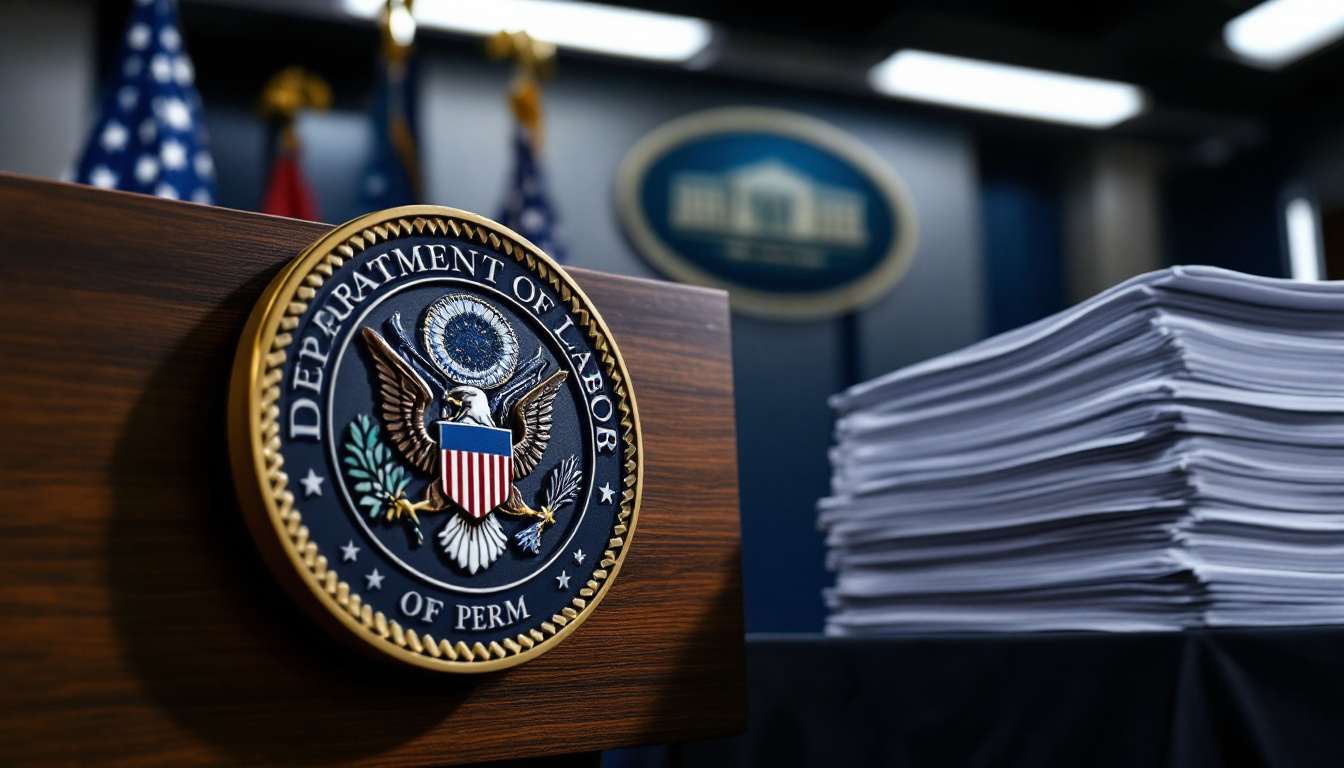
Some companies advertise job openings at two in the morning. On the radio. In cities where nobody with the right qualifications would ever hear them.
That's not a staffing strategy. That's evidence.
Labor Secretary Keith Sonderling laid the whole scheme bare this week, telling Breitbart's Neil Munro that the Department of Labor is going after corporations that rig their hiring processes to shut out American graduates in favor of cheaper foreign labor. Not "concerns about." Not "reviewing practices." The word Sonderling used was fraud.
"We're trying to eliminate the fraud," Sonderling said. And then he explained exactly how the fraud works.
The racket runs through the PERM labor certification system — the process companies must complete before sponsoring a foreign worker for a visa. The rules say employers have to prove no qualified American worker is available for the job. So employers make sure no qualified American worker ever sees the posting. They advertise positions in the wrong cities. They run listings in the middle of the night. They write job descriptions so narrowly tailored that only the specific foreign candidate they've already chosen could possibly qualify.
"The Vice President's task force has allowed us to really dive into this issue of immigration fraud in employment, and what we see there is that employers use some of these programs… to bring in workers," Sonderling said, referencing the effort Vice President JD Vance has been leading on immigration enforcement. "What they do is that they advertise in the middle of the night on the radio."
The result is a system where roughly 3 million mixed-skill foreign college graduates get placed into American jobs at wages 20 to 30 percent below what an American would earn. That wage suppression doesn't stay in a vacuum. It ripples across $2.1 trillion in U.S. household income — money that should be flowing to the Americans who earned degrees, took on student debt, and played by the rules only to find the game was rigged before they walked in the door.
Mark Krikorian, director of the Center for Immigration Studies, offered some cautious optimism. "I think it's fantastic what Labor Secretary Sonderling is doing, but I'll believe it when it actually starts making a difference," he said. That skepticism is earned. Washington has talked about H-1B abuse for decades. The difference now is that the Department of Labor, the Department of Homeland Security, and the Department of State are moving together on new PERM regulations that would require genuine recruitment efforts, block companies from replacing recently laid-off American workers, and mandate higher wages for visa sponsorships.
Kevin Lynn, founder of U.S. Tech Workers, pointed to why this story never gets the coverage it deserves. "They report what the people that pay their advertising want them to report," Lynn said of mainstream media outlets. "We get better reporting out of India than from reporters from the U.S." The tech giants who benefit most from visa labor — companies like Microsoft and Apple — are the same companies buying ad space on the networks that are supposed to be covering the story.
The immigration law industry is already in full panic mode. Amber Davis, a lawyer at Waypoint Immigrant USA, warned that the new rules mean "you are all but guaranteeing that a lot of these companies cannot sponsor immigrants." K. Edward Raleigh, a partner at the powerhouse immigration law firm Fragomen, complained that "the cumulative net effect is to remove high-skilled immigrants from the United States." That framing — high-skilled — does a lot of heavy lifting when 20,000 of the annual visa slots go to lower-wage nurses and therapists through the Schedule A pipeline. The word "high-skilled" is doing PR work, not describing reality.
For twenty years, every major tech company in America has sworn under oath that they tried to hire Americans first. They submitted the paperwork. They checked the boxes. And they did it knowing the job posting ran at 2 a.m. in a city where no one would hear it.
Sonderling didn't call it a loophole. He called it fraud. The PERM applications are still on file.