

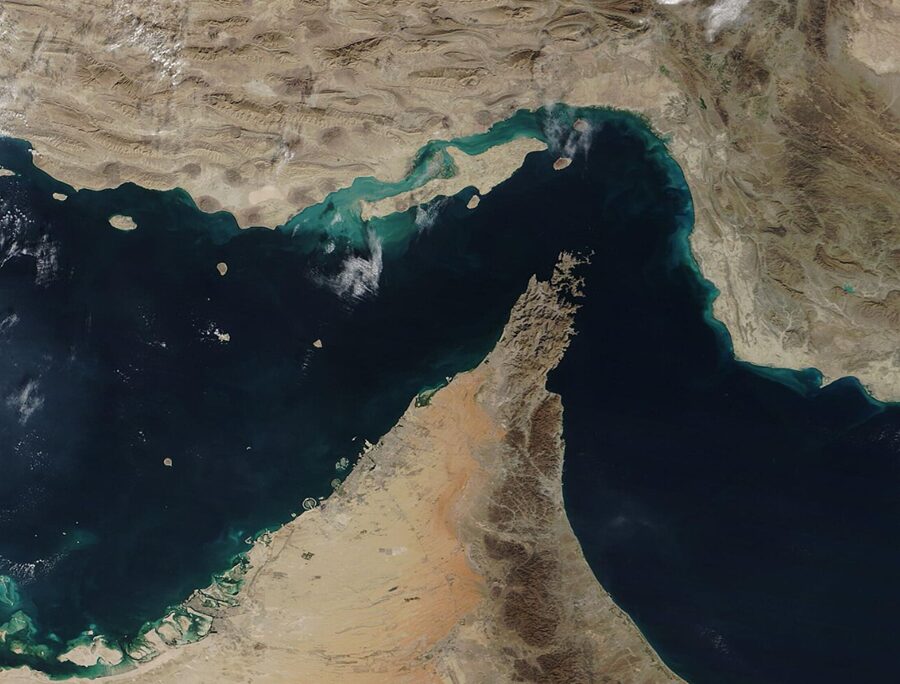
Day twelve. Iran has no navy. It still hit three ships on Wednesday.
That’s the problem in one sentence. Operation Epic Fury destroyed roughly 90% of Iran’s ballistic missile launchers, sank 30 ships, and cut drone launch rates by 83%. It did not destroy Iran’s ability to make the Strait of Hormuz — through which 20% of global oil flows every single day — functionally unusable. Mines don’t need a navy. Drones launched from a coastline don’t need a fleet. And right now, insurance premiums to transit the strait have hit what French naval commanders are calling “insane” levels. Shipping companies aren’t moving until the math works.
Trump said the war is “very complete, pretty much.” The Pentagon posted “We Have Only Just Begun to Fight” the same day. Both statements are tactically coherent — and they point to four different paths out of this, each with a real price tag.
Here they are.
Option One: Declare Victory and Leave
Withdraw in four to five weeks. Claim — accurately — that Iran’s conventional military is destroyed, its Supreme Leader is dead, and the operation exceeded every objective. Let the region stabilize on its own.
The cost: Iran reasserts control of Hormuz the moment American pressure lifts. The mines don’t clear themselves. Mojtaba Khamenei, running a government that is now functionally a military junta with personal revenge as its operating motive, has every incentive to demonstrate that Iran can still project power. Option One ends the American engagement. It does not end the crisis — it just hands the next chapter to the people we didn’t finish.
Option Two: Hold Until the Strait Is Open
Continue military pressure, add naval escorts for commercial shipping, and don’t declare victory until tanker traffic is actually moving again. No regime change. No ground troops. Just: the Strait reopens on American terms.
This is the most viable option — and the hardest to execute. A French retired vice admiral put it plainly this week: escorting ships through the Strait right now is “suicidal.” After a ceasefire, it becomes merely “dangerous.” Iran doesn’t need warships to threaten a tanker. It needs one drone, one mine, one fast attack boat to score a hit that creates an oil spill, shuts the lane, and spikes prices another $30 a barrel. The mine-clearing timeline — based on Gulf War I precedent — runs weeks to months, not days. Every week the Strait stays effectively closed is another week of elevated gas prices in midterm territory.
The escort option also has an international law wrinkle: the U.S. has no jurisdiction over the sovereign waters controlled by Iran and Oman. You can escort. You cannot occupy. That’s a real constraint.
Option Three: Take Over the Strait
Trump floated this himself. “I’m thinking about taking it over,” he told CBS Monday. If Iran disrupts oil flow, he threatened to hit them “twenty times harder.”
The logic is straightforward: establish permanent American naval control of the chokepoint, make Iranian interference with shipping an act of war against the United States, and price them out of the asymmetric disruption game. France has indicated potential allied support. The problem is the same international law issue — at scale. A permanent military occupation of sovereign waters requires either Iranian capitulation or a legal framework that doesn’t currently exist.
This option becomes viable exactly one way: Iran formally surrenders control of the strait as part of a peace agreement. Which brings us to Option Four.
Option Four: Force a Real Settlement
Iran’s foreign minister ruled out diplomacy this week. Trump’s response was “UNCONDITIONAL SURRENDER.” That is not a throwaway line — it is the endgame logic for Option Four. Saudi Arabia, Qatar, and the Gulf states have enormous economic leverage over Iran’s remaining networks. Professor Scott Lucas, who studies Iranian domestic politics, has noted that another oil price surge combined with Gulf state pressure is the fastest path to creating conditions where Iranian moderates — if any survive Mojtaba’s consolidation — can force a negotiated end.
This is the option that solves the Hormuz problem permanently. It’s also the one that requires the most variables to line up simultaneously: Gulf state cooperation, Iranian internal fracture, and Mojtaba either dead or isolated enough that the IRGC generals around him see survival in settlement rather than defiance.
The mine-clearing clock is the variable everyone is underweighting. Ceasefire announcements do not reopen straits. Mine-clearing operations do. Gulf War I coastal mine clearance took months. The global oil market — and American gas prices — will not normalize until ships are actually moving, which means the economic pressure on Trump’s midterm position doesn’t end when a ceasefire is signed. It ends when the last mine is cleared.
That timeline creates a window. The longer Hormuz stays closed, the more pressure builds on Gulf states to act — because their economies are exposed too. Saudi Aramco’s CEO already used the word “catastrophic” this week. The Gulf states are not neutral observers. They are motivated parties who want this over at least as much as Trump does.
Option Two gets the Strait open. Option Four keeps it open. The question Trump is actually answering right now — whatever the mixed messaging says — is whether he can get to Option Four before the midterm clock runs out, or whether he settles for Option Two and leaves Mojtaba’s junta intact and quietly rebuilding.
Seven Americans have died. Iran is still hitting ships. “Very complete” is where Trump wants to be. The mines say otherwise.