

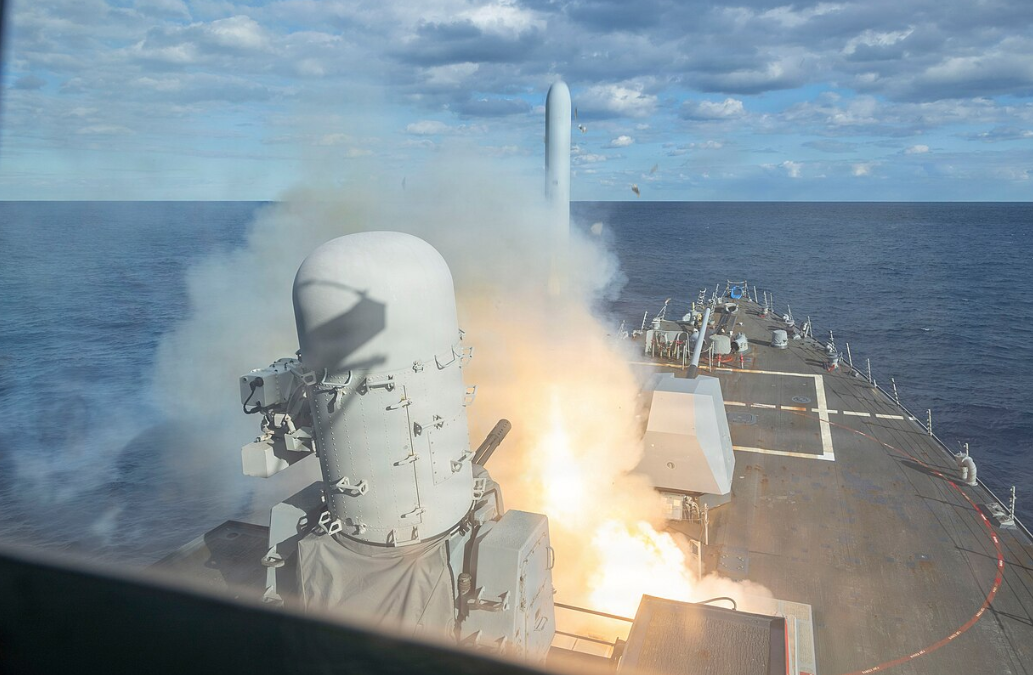
Iran fired ballistic missiles at a Marine barracks in Jordan. They launched drones toward U.S. positions in Bahrain and Kuwait. And then President Trump did what President Trump does — he hit back, hard, across roughly 100 Iranian military targets in a single wave of strikes on September 1st.
He also promised more are coming.
The strikes targeted Iranian air-defense systems, radar installations, and maritime assets, including the engine rooms of two Iranian government tankers operating in the Strait of Hormuz. U.S. officials told Axios that "the tanker attacks were carried out in direct retaliation for Iranian aggression" — a sentence so refreshingly direct it almost doesn't sound like it came from Washington.
The Strait of Hormuz is where roughly one-fifth of the world's oil supply passes through. On a normal night, 15 to 20 tankers move through the corridor, carrying approximately 10 million barrels per day — roughly double the prewar volume. On Monday, only five vessels transited the Strait. None of them were liquid tankers. Brent crude is now above $92 per barrel.
This isn't a skirmish. This is more than six months of escalating conflict.
Iran's latest provocations included laying mines in the Strait and launching missile attacks on U.S. positions. Two Saudi-linked supertankers — the Saudi-flagged Sidr and the Liberian-flagged Senegal Prosperity — were hit by unidentified projectiles within minutes of each other. The response from Washington wasn't a press conference. It was ordnance.
Trump warned that Iran would face "a harsher response" if it continued retaliating, noting that Iran had been "attempting to rebuild radar and other military capabilities" even after the first wave of strikes. That's the part that changes the equation. This isn't a one-and-done punitive strike designed to look tough for the Sunday shows. It's an open-ended commitment to degrading Iranian military capacity for as long as Tehran keeps escalating.
The usual crowd will frame this as reckless. They'll invoke "World War III" the way they do every time American force is projected somewhere other than a faculty lounge. But the timeline matters. Iran mined international shipping lanes. Iran attacked allied tankers. Iran fired missiles at U.S. Marines. The strikes came after provocation — not before it. Calling a response to aggression "escalation" requires ignoring who shot first, which is exactly what the critics are hoping you'll do.
The broader pattern is unmistakable. Under the Obama-era Iran deal, Tehran was handed billions in unfrozen assets and a pathway to nuclear capability in exchange for promises they never intended to keep. The Strait stayed tense, proxies stayed funded, and the regime kept building. Now they've moved from proxy warfare to direct attacks on American servicemembers.
The last administration sent pallets of cash. This one sends coordinates.