

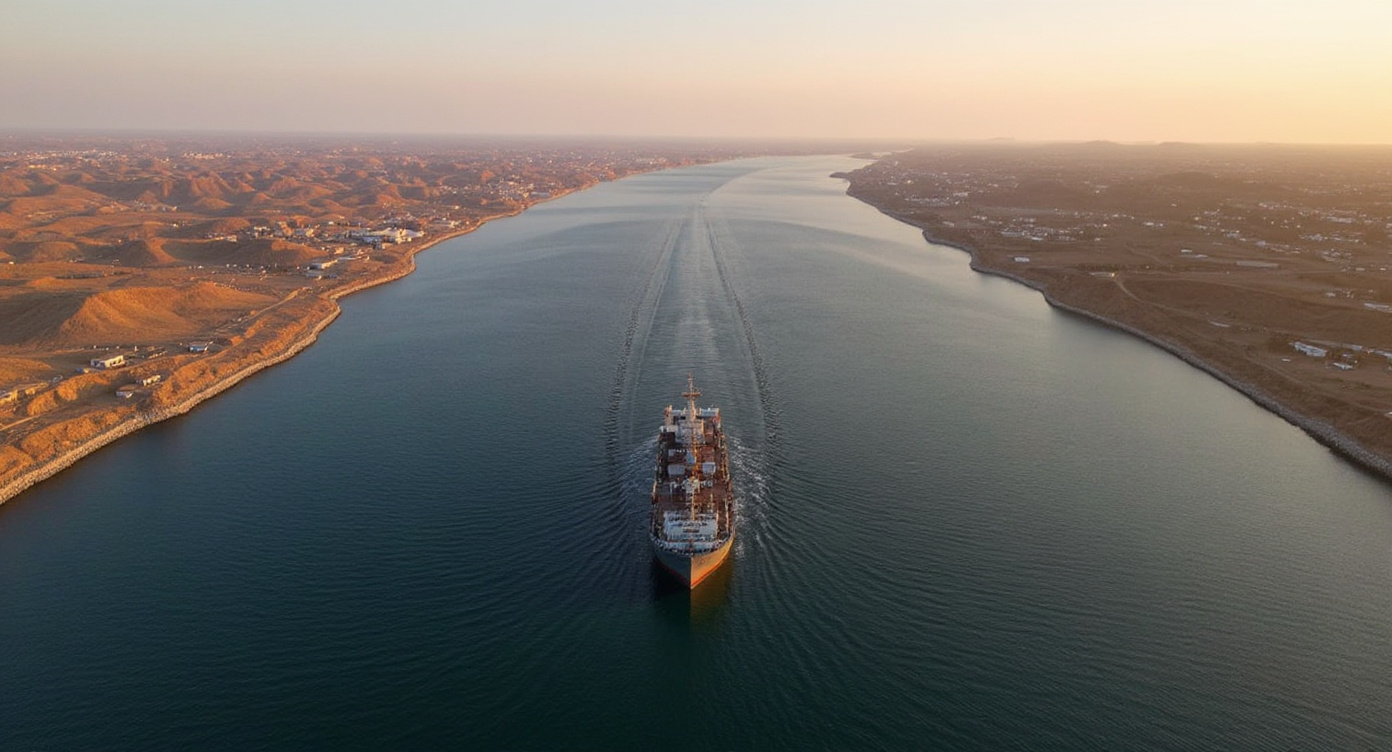
On July 9, exactly 22 commercial ships crossed the Strait of Hormuz. The daily average before the February 28 war with Iran was 147. That's not a shipping lane. That's a ghost town with water.
Twenty-four hours ago, President Trump wanted to charge everyone 20% to use it. Now he's letting everyone through for free — everyone except Iran.
The pivot happened Tuesday morning on Truth Social. "Based on highly productive conversations with Middle East leadership, I have decided to replace the 20% United States Reimbursement Fee with Trade and Investment Deals," Trump posted, scrapping the fee that had drawn immediate pushback from the International Maritime Organization, the United Nations shipping agency that declared there was "no legal basis" for mandatory tolls on an international strait.
Secretary of State Marco Rubio had said as much himself back in June: "No country is allowed to charge tolls or fees on an international waterway." Which made the whole 20% gambit look less like policy and more like an opening bid at a car dealership. You ask for the moon, settle for the trade deals.
And that's exactly what happened. Trump told reporters the real play was investment: "You have Saudi Arabia, UAE, Qatar, Bahrain and Kuwait... they would love to invest more money in the United States at record amounts." The fee was the lever. The deals were the goal. The fee is gone. The investment deals in America are not.
But here's what didn't change: the blockade.
CENTCOM announced the Iranian blockade went into effect Monday at 4 p.m. ET. Iranian ships and Iranian customers — blocked. Everyone else sails free. Trump's framing was characteristically subtle: "We are reinstating THE IRANIAN BLOCKADE... The U.S. will be known as 'THE GUARDIAN OF THE HORMUZ STRAIT.'"
The Strait of Hormuz carries roughly 20% of the world's energy supplies under normal conditions. Iran's Revolutionary Guard had been striking tankers in the waterway, killing at least one person aboard a UAE-flagged vessel. One day later, ship traffic collapsed to that 22-crossing number. The U.S. Navy's 5th Fleet, based in Bahrain, is now essentially running traffic control for the world's most important chokepoint.
Iran's Parliament speaker Mohammad Bagher Ghalibaf, who had served as Tehran's negotiator with the U.S., and Foreign Minister Abbas Araghchi are now watching their country's shipping access get severed while every other nation in the region sails through unimpeded.
The critics will point out that Trump proposed the 20% fee and reversed it within 24 hours, which looks chaotic. Fine. But the net result is worth examining on its own terms: Gulf states are lining up with investment commitments, the blockade is active, and the shipping lane is open for everyone who isn't funding proxies and striking tankers.
Michael Singh of the Washington Institute for Near East Policy called it a Mideast recalibration. That's the polite version.
The less polite version: Trump started February with airstrikes, spent June trying to negotiate a deal, and arrived at July with the U.S. Navy physically controlling who enters and exits one of the most important waterway on Earth.
"Oil is flowing like never before, thanks to the awesome Power of the United States Military," Trump posted.