

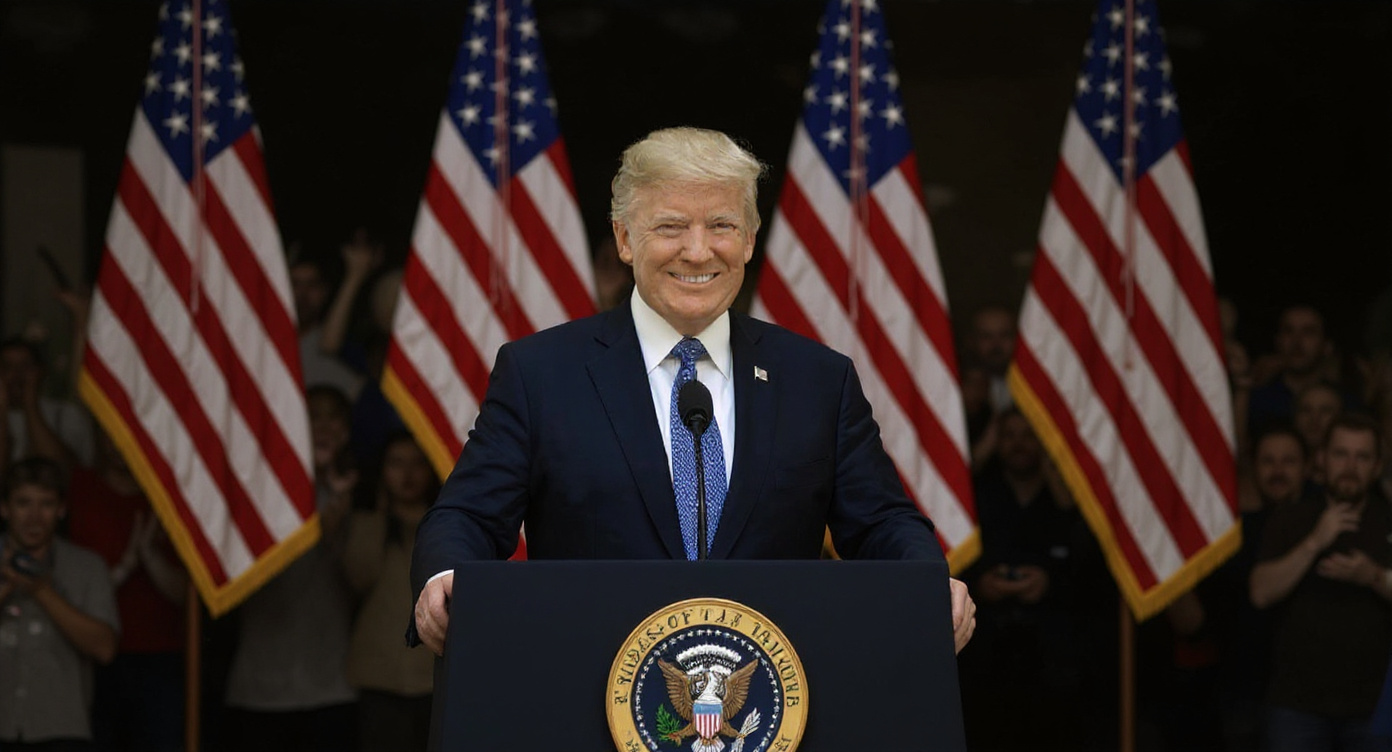
October 19 in Wichita, Kansas. October 20 in Greenville, North Carolina. October 21 in Clemson, South Carolina. October 22 in Sioux City, Iowa. October 23 in Fort Myers, Florida. October 24 in Macon, Georgia. October 25 in St. Clair County, Michigan. Seven days. Seven states. Seven rallies. That's not a campaign schedule — that's an endurance test most politicians half his age wouldn't attempt.
President Trump's name isn't on the ballot this November. He's doing it anyway.
The sprint is designed as a turnout machine for Republican midterm candidates across battleground and contested states. Vice President JD Vance is running a parallel route of his own. The dual-track operation is the kind of logistics that resembles a general election, not a midterm assist. But the stakes warrant it — the Cook Political Report recently shifted the Kansas Senate race to "Likely Democrat" and a Kansas House race to "Toss Up," which tells you everything about where the fight actually is.
Senator Roger Marshall is the Republican candidate in Kansas. Mike Rogers is the GOP Senate nominee in Michigan. Both states are getting a Trump rally in the final stretch, and neither booking is a coincidence. Kansas and Michigan represent two different problems — one a state that should be safe but isn't, the other a blue-leaning battleground where energy on the ground decides everything.
The core question behind the blitz is whether the MAGA coalition shows up when Trump's own name isn't printed on the ballot. Every midterm cycle since 2018 has tested this. The rallies are the answer — not a speech, not an endorsement tweet, but Trump physically standing on a stage in seven states telling people who to vote for and why.
The schedule also tells you what Trump thinks a Democratic House would do. As the article put it: "A Democratic House would not behave like a loyal opposition interested in helping the country." That's not speculation. We watched two impeachments, a January 6th committee, and years of subpoenas designed to paralyze the executive branch. The rallies aren't charity. They're defense.
Democrats, meanwhile, are deploying surrogates whose biggest draw is a half-full community center. The contrast isn't subtle. Trump packs arenas in states he already won; the opposition argues on cable news about whether their candidates should even mention the current president by name. One side has a ground game. The other side has a messaging problem they keep workshopping.
Seven states in seven days. The last president who campaigned this hard for midterm candidates did it because his party was about to lose the House and he was trying to limit the damage. Trump is doing it because he thinks his party can gain seats — and he's willing to burn the jet fuel to prove it.
Vance is out there too. The parallel routes mean Republican voters in overlapping media markets get hit twice.