

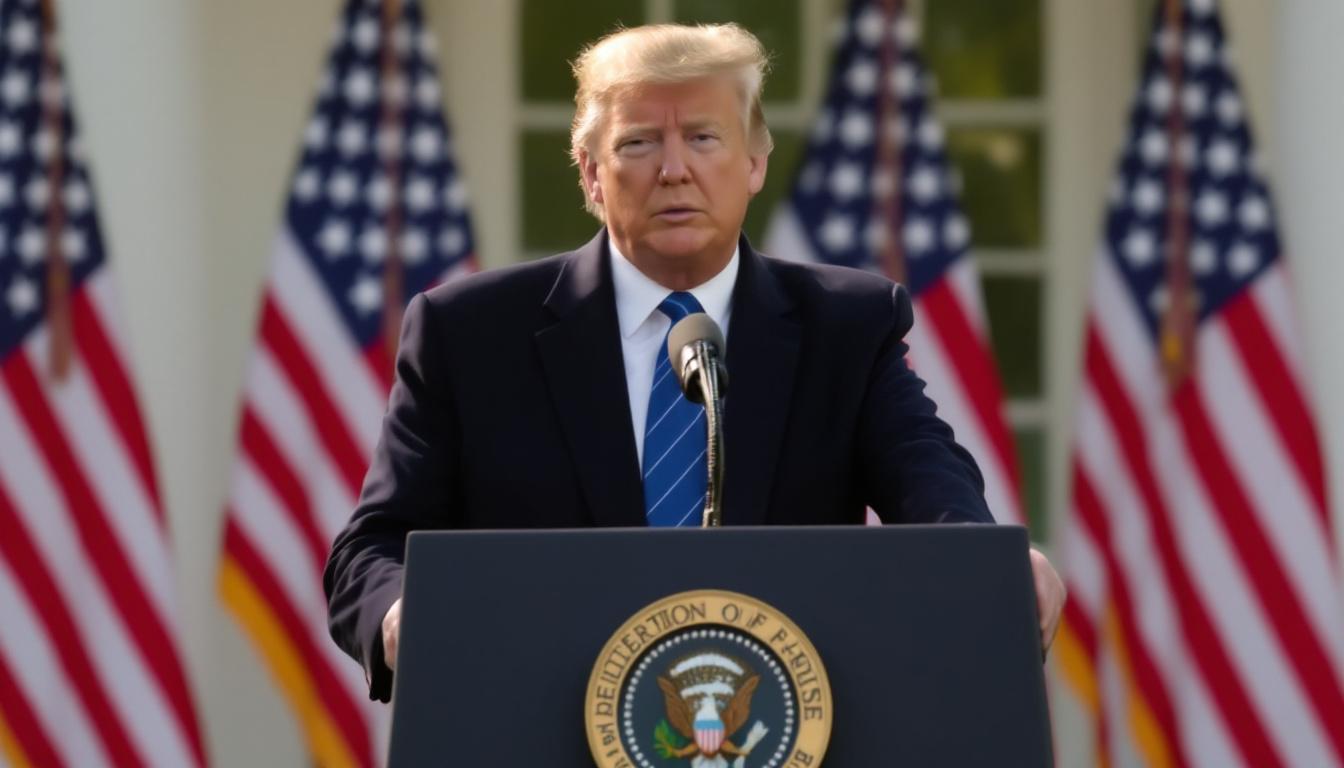
If you’re keeping score at home, the Supreme Court told Trump he couldn’t use Door A. So he kicked in Door B, walked through it sideways, and came out the other side carrying bigger tariffs than the ones they just killed. The man treats legal setbacks the way most people treat speed bumps — minor annoyances that slow you down for half a second before you floor it again.
Meanwhile, Democrats are still holding a press conference celebrating their “historic victory” at the Supreme Court. Guys, he already replaced them. You won the battle and lost the war while the confetti was still falling.
Skip ahead to minute 1:55…
Let’s talk about what these new tariffs actually do, because the details are beautiful.
First, the pharmaceutical tariffs. One hundred percent on patented drugs manufactured overseas. That’s not a typo. If a pharmaceutical company holds an American patent, charges Americans the highest prices on the planet, and then manufactures the pills in Ireland or India or wherever the labor is cheapest — congratulations, your import bill just doubled. Big Pharma has spent decades playing this game: patent the drug here, manufacture it there, ship it back, and pocket the difference while American factory towns collect dust. Trump just told them the free ride is over.
Now here’s the clever part. Companies that agree to move manufacturing back to the United States — actual brick-and-mortar, hire-American-workers, build-a-factory onshoring — don’t pay the tariff. Not a dime. So this isn’t a tax on medicine. It’s a tax on shipping American jobs overseas. If Pfizer wants to build the plant in North Carolina instead of Dublin, they pay zero. If they want to keep their Irish tax shelter and their cheap foreign labor, they pay 100 percent. That’s not protectionism. That’s a choice.
The steel and aluminum tariffs got restructured too. Products made entirely or almost entirely of foreign steel, aluminum, or copper now face a flat 50 percent tariff. Derivative products — things substantially made from those metals — get hit with 25 percent. But here’s the kicker: if you’re a manufacturer abroad using American-sourced steel, aluminum, or copper, your rate drops to 10 percent. And if your product contains less than 15 percent of those metals? You’re exempt entirely. Trump basically built a tariff system that rewards anyone who buys American raw materials and punishes anyone who doesn’t. It’s almost like he understands how incentives work.
The Democrats and their friends in the media immediately started screaming about consumer prices. “Americans will pay more for everything!” they wailed, clutching their pearls so hard they left fingerprints. You know what Americans are already paying more for? Prescription drugs. We pay more than any country on Earth for the same medications, manufactured in the same overseas factories, by the same companies that spend more on stock buybacks than research. But sure, tell me more about how tariffs are the problem.
Here’s what the media won’t tell you: the government collected $151 billion in tariff revenue in just the first five months of the fiscal year. That’s nearly four times what we collected during the same period last year. And after the Supreme Court ruling, a federal judge ordered the government to refund $130 billion of the old tariffs that got struck down. Over 2,000 companies — including Costco and FedEx — have filed lawsuits demanding their money back. So the government is simultaneously paying back the old tariffs and collecting even more from the new ones. It’s like watching someone get evicted from an apartment and immediately move into a nicer one across the hall.
The Wall Street crowd and the free-trade fundamentalists will tell you this is all going to backfire. They said the same thing about the original tariffs. They said manufacturing would collapse. They said prices would skyrocket. They said trading partners would retaliate and we’d all be eating rice and beans by Christmas. What actually happened? The trade deficit with China dropped. Companies started announcing new American factories before the tariffs even took effect. And the countries that were supposed to “retaliate” started lining up to cut deals instead, because it turns out when you’re the world’s largest consumer market, people want to sell to you more than they want to spite you.
The pharmaceutical angle is where this gets personal for regular Americans. We’ve all been to the pharmacy. We’ve all watched the numbers on the screen and wondered how a bottle of pills that costs $12 in Canada somehow costs $400 here. The answer has always been that Big Pharma plays the global arbitrage game — American patents, foreign manufacturing, maximum profit, zero accountability. Trump just jammed a wrench into that machine. The pharmaceutical lobby is going to spend a fortune trying to kill these tariffs or water them down. They’ll fund studies, hire lobbyists, run ads about grandma not being able to afford her heart medication. Don’t fall for it. Grandma can’t afford her heart medication NOW, and that’s not because of tariffs — it’s because of the system these tariffs are designed to break.
The Supreme Court thought they closed the book on Trump’s trade agenda. They didn’t even close the chapter. The man came back on the exact anniversary, stood in the exact same spot, and signed tariffs that are arguably more targeted, more legally bulletproof, and more devastating to the people who’ve been ripping us off than the originals ever were.
They told him he couldn’t do it. He just did it differently. And bigger.
That’s not stubbornness. That’s strategy. And whether the establishment likes it or not, American steel workers, pharmaceutical employees, and copper miners just got the best anniversary present they’ve had in a generation.
Happy Liberation Day. Again.