

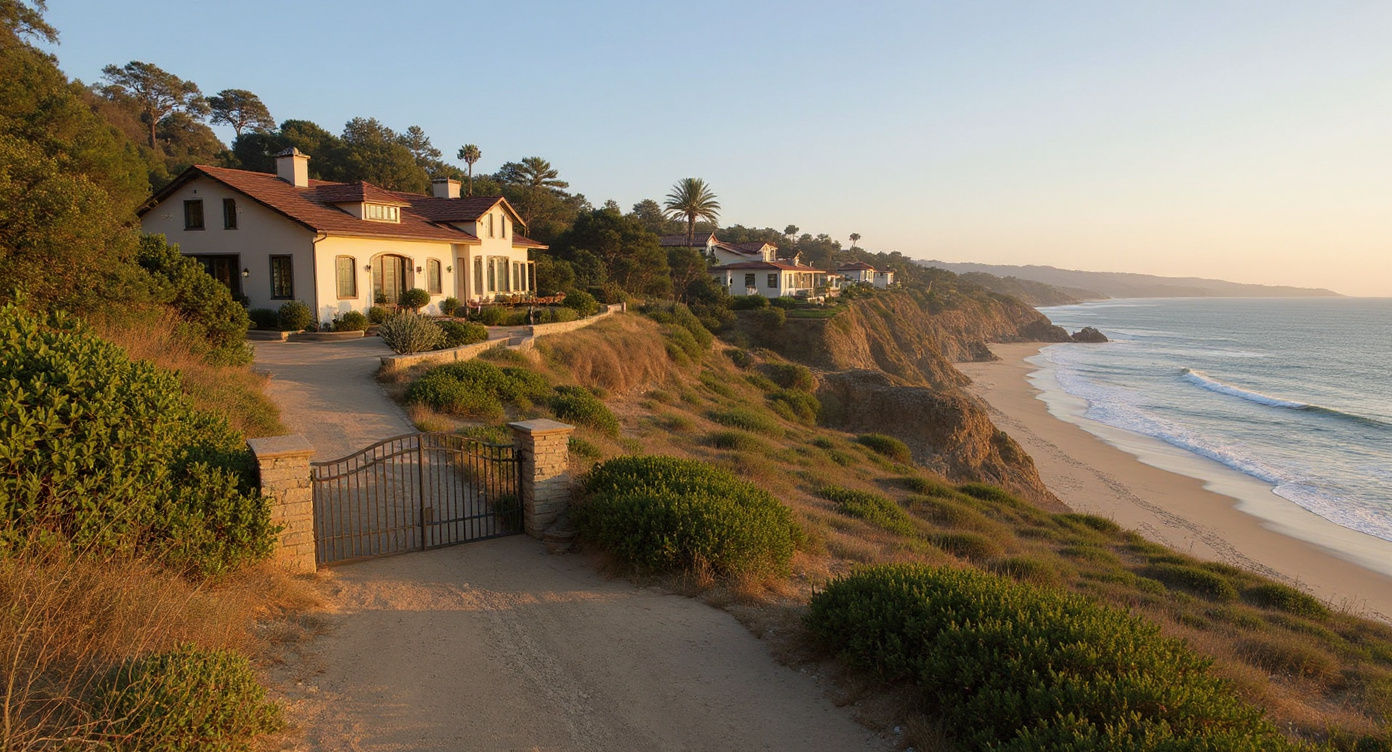
Kamala Harris and her husband Doug Emhoff paid $8.15 million for a roughly 4,000-square-foot estate on a three-quarter-acre bluff in Malibu's Point Dume peninsula. The deal was off-market, because when you're buying into one of the most exclusive coastal enclaves in California, you don't exactly list it on Zillow.
Point Dume is 2.2 percent Black. Malibu overall is under 1 percent.
"There was a little girl in California who was part of the second class to integrate her public schools, and she was bused to school every day," Harris said during the 2019 Democratic presidential debate, staring down Joe Biden over his history with segregationist senators. "And that little girl was me."
That little girl just bought a house in a seaside community that has "long been accused of hostility to people of color." The Free Beacon's Jon Levine detailed how Harris's new neighborhood isn't just wealthy and white by coincidence — it's structurally designed to keep outsiders out.
Here's how it works. All California beaches are legally public below the high-tide line. That's state law. But reaching Little Dume Beach — the private stretch below Harris's new bluff — is nearly impossible without a key to pass through one of three private gates controlled by the local homeowners. Two of those gates reportedly use facial recognition technology. The beach is public in theory and gated in practice, which is a neat trick if you can afford it.
The property itself sits atop a 63-acre bluff with sweeping coastal views and the kind of privacy that money and facial recognition gates can buy. Celebrity neighbors have historically included Julia Roberts and Sean Penn, though the neighborhood has more recently attracted Silicon Valley money — Google co-founder Sergey Brin, venture capitalist Marc Andreessen, and Emerson Collective president Laurene Powell Jobs now call Point Dume home.
None of this is illegal. Nobody's saying Kamala Harris can't buy a house wherever she wants. The question is simpler than that: When your entire political identity is built on fighting segregation and racial exclusion — when the defining moment of your presidential campaign was a story about being bused to an integrated school — what does it mean when you choose to live in a gated, nearly all-white beach enclave that uses technology to keep the public off a public beach?
The "busing" moment in that 2019 debate wasn't a policy argument. It was a personal story weaponized for political advantage. Harris used her childhood to paint Biden as complicit in segregation. It worked — temporarily. It was the emotional peak of her campaign. She printed it on T-shirts.
Now she lives behind a facial recognition gate in a zip code where Black residents round to a statistical footnote.
That little girl who was bused to school found a neighborhood where the bus doesn't stop.