

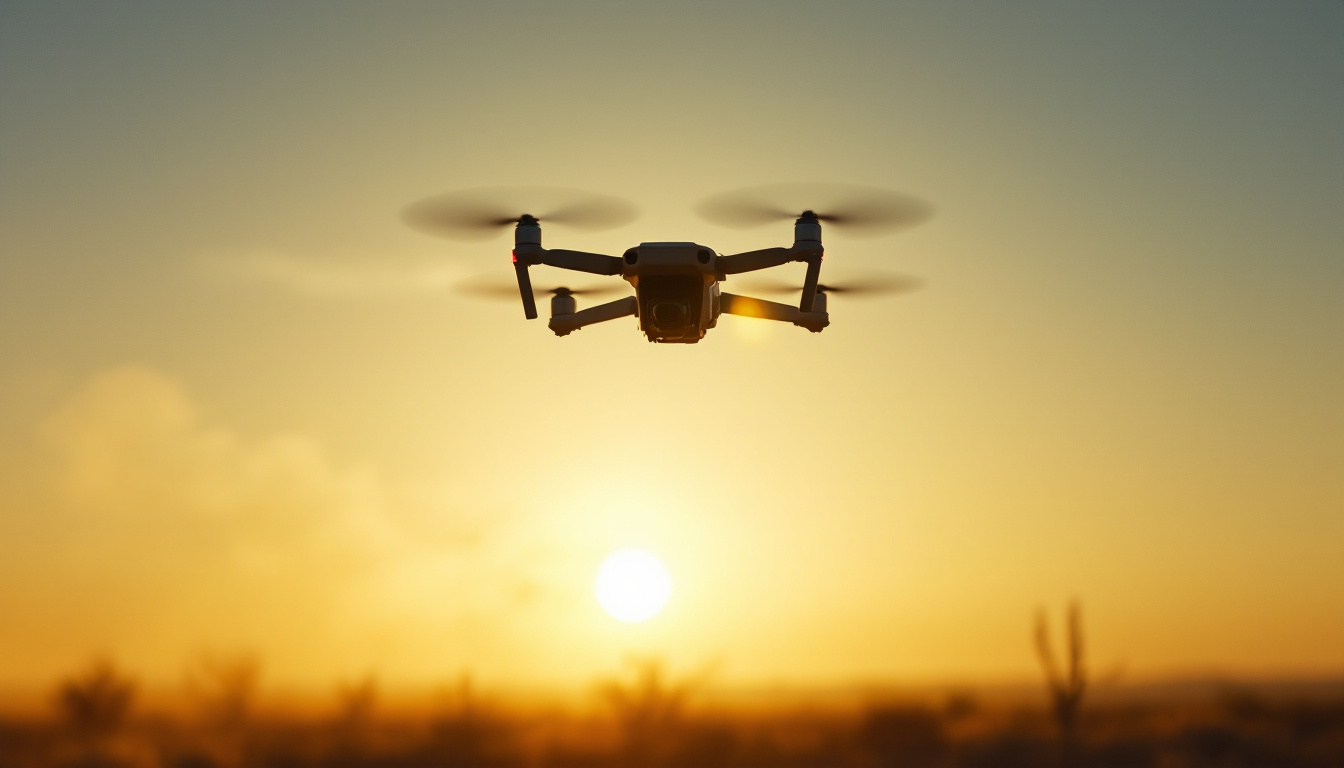
Three cartel-linked drones crossed into U.S. airspace near the Texas border earlier this week. Joint Task Force–Southern Border engaged them with an Army high-energy laser — a directed-energy weapon that, in less clinical terms, burns things out of the sky. All three unmanned aircraft systems were, per U.S. Northern Command, "engaged and defeated."
Incinerated is the more accurate word.
The engagement came months after the FAA and Department of Defense reached an agreement in April authorizing the use of high-energy lasers along the southern border. That agreement exists because the cartel drone problem had gotten completely out of hand. In 2024, Customs and Border Protection was tracking roughly 1,000 drone incursions per month — cheap commercial drones the cartels were using for surveillance, drug transport, and testing Border Patrol response times.
One thousand per month. That's not a nuisance. That's an air campaign.
The cartels adapted to the border the way any adversary adapts to a static defense — they went around it, over it, and through it. Commercial drones cost a few hundred dollars. They can carry small drug payloads. They can map patrol routes. And until this spring, there was no legal framework for shooting them down over U.S. soil. The FAA treated the border the same as downtown Dallas — unauthorized drone interdiction was a regulatory headache, not a tactical option.
The April agreement changed that. The FAA carved out authority for the DoD to deploy directed-energy systems specifically along the southern border corridor. The Army's high-energy laser doesn't use kinetic projectiles, which means no falling debris, no stray rounds, no collateral damage lawsuits. It's a beam. It locks on. The drone stops existing.
The left will raise concerns about "militarizing the border." Which is an interesting objection when the other side is running an aerial surveillance and smuggling operation with unmanned aircraft across sovereign U.S. territory. The cartels militarized the border. The question was always whether we'd respond in kind or keep pretending that a thousand drone flights a month was a customs issue.
This is what changes when the rules of engagement catch up to the threat. For years, Border Patrol agents watched cartel drones overhead and had no authority to touch them. The drones mapped their positions, timed their rotations, and relayed the intel back to smuggling teams. The agents on the ground knew exactly what was happening. They just couldn't do anything about it.
Now there's a laser.
The engagement was carried out under the joint operational authority of U.S. Northern Command and Customs and Border Protection — federal military assets working alongside border enforcement. Three drones went up. None came back.
The broader signal matters more than three burned-out quadcopters. The cartels run cost-benefit calculations like any other enterprise. When a $300 drone can survey miles of border with zero risk, the math favors sending a thousand a month. When that $300 drone gets vaporized by a weapon system the pilot can't see, can't outrun, and can't jam, the math changes.
A thousand incursions a month was the price of doing nothing. Three incinerated drones is the opening bid on doing something.