

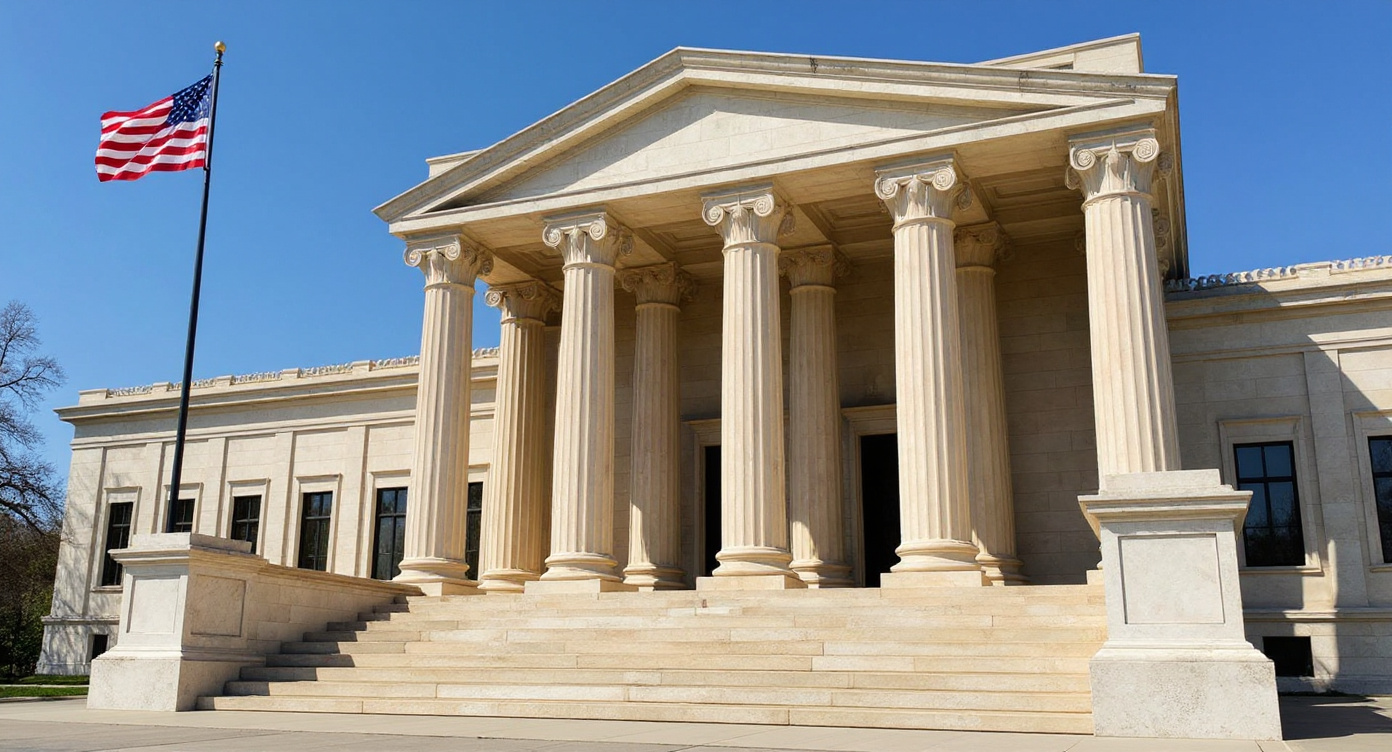
The question before the Supreme Court in Mullin v. Al Otro Lado was whether a person physically located in Mexico has legally "arrived in" the United States. Six justices looked at a map and said no.
Three justices needed more time to think about it.
Before getting to the ruling, it's worth noting where the underlying policy came from. The Department of Homeland Security first implemented a "metering" policy in November 2016 — during the final months of the Obama administration — that limited the number of asylum seekers inspected daily at U.S.-Mexico border ports of entry. Lower courts blocked it as a violation of federal law. The government rescinded it by November 2021. The Trump administration revived and defended the legal authority behind it. The Obama-era policy is now the law of the land.
Justice Samuel Alito, writing for the 6-3 majority on June 25, explained the concept with the kind of patience usually reserved for teaching geography to kindergartners. "A person arrives in a destination only when he enters it," Alito wrote, pulling analogies from football end zones, house entries, and military sieges to illustrate what "arrival" means in plain English. The ruling held that migrants physically located in Mexico possess no statutory right to asylum under the Immigration and Nationality Act.
The case hinged on the section of federal law that grants asylum eligibility to aliens who are "physically present" in the United States or who are "arriving in" the country. Immigration attorneys had argued for years that presenting yourself at a port of entry — while still standing on the Mexican side — constituted "arriving" and triggered the full weight of American asylum protections. Alito and the majority disagreed. The legal protections, the Court held, "have not kicked in" for people stopped at the border who haven't crossed it.
Your Amazon delivery doesn't "arrive" when the truck enters your zip code. It arrives when it's on your porch. Alito's majority applied the same principle to national borders.
Chief Justice John Roberts and Justices Clarence Thomas, Neil Gorsuch, Brett Kavanaugh, and Amy Coney Barrett joined the majority. Thomas filed a separate concurrence.
Justice Sonia Sotomayor read her dissent aloud from the bench. She argued that asylum seekers are "arriving" when they present themselves at a port of entry because that is where they encounter immigration officials. "More people will die," she warned. "More people will attempt to cross the border illegally." Justices Elena Kagan and Ketanji Brown Jackson joined her. Jackson also filed a separate dissent.
Sotomayor's argument has a certain internal logic — if you define "arriving" as "showing up near the place," then yes, these applicants were arriving. But federal law doesn't use the word that way, and neither does anyone else.
The ruling effectively closes a loophole immigration lawyers had used for years to claim due process rights for individuals who never set foot on American soil. DHS now has clear legal authority to turn back asylum seekers at ports of entry without processing their claims — a power the agency had exercised but never had definitively upheld by the Court.
The immigration bar spent years constructing a legal fiction in which the U.S. border was a suggestion rather than a boundary. Standing in Tijuana meant you were subject to American jurisdiction. Waiting in Juárez entitled you to American due process. The theory required you to believe geography was a social construct — that a line on a map meant nothing if you were close enough to see the other side.
Six justices just reminded everyone that borders are, in fact, where countries begin and end. The other three wrote a dissent about it.