
Over two thousand preschools participate in Colorado's universal preschool program. Catholic schools from the Archdiocese of Denver applied too. Colorado said no — not because they failed any educational standard, but because they operate according to Catholic teaching on marriage and family.
Justice Brett Kavanaugh wanted to know why.
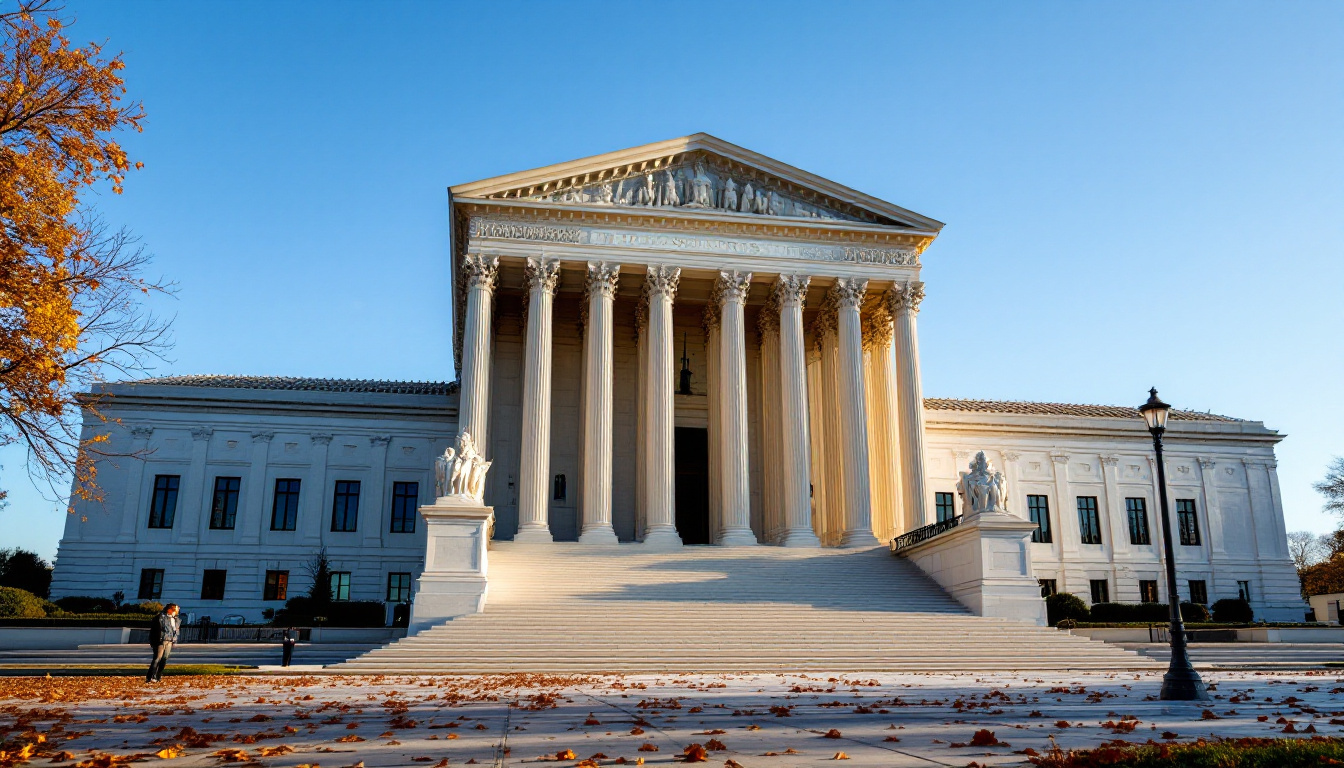
"Why has this been provoked?" Kavanaugh asked Colorado Deputy Solicitor General Helen Norton during oral arguments in St. Mary Catholic Parish v. Roy on November 3. The question hung in the courtroom for a reason. Colorado launched its universal preschool program in 2023, offering every family 15 hours of free preschool per week through a network of participating providers. More than 2,000 preschools signed up. But when Catholic parishes from the Archdiocese of Denver applied, Colorado told them they'd have to abandon their religious admissions policies — policies rooted in Catholic doctrine — or stay out.
The parishes sued. The case climbed through the U.S. Court of Appeals for the 10th Circuit, and in April 2026 the Supreme Court agreed to hear it.
Monday's oral arguments ran over two hours, and the justices weren't subtle about where this is heading. Justice Amy Coney Barrett pressed Norton on the central absurdity: why would Colorado "impose a condition" that religious schools "will be unable to agree to?" Norton's answer — that "Colorado welcomes religious preschools" to the program — landed flat when the whole case exists because Colorado excluded religious preschools from the program.
Nicholas Reaves, counsel for the Catholic parishes, put it simply. Catholic schools "exist to pass on the faith to the next generation," he told the Court. And this isn't a binary choice: "This is not a zero-sum game." Catholic preschools joining the program doesn't remove anyone else from it. Nobody loses a seat.
Justice Ketanji Brown Jackson tried the other angle, telling Reaves "your schools want to discriminate by exclusion." Justice Elena Kagan argued the parishes were seeking a ruling going "far beyond" existing precedent. But the Court's 6-3 conservative majority appeared unmoved. Chief Justice John Roberts noted that the effect of Colorado's policy looked "pretty much the same" as religious discrimination the Court has already struck down — pointing to the 2022 Carson v. Makin decision, where the Court ruled Maine couldn't exclude religious schools from a tuition program.
Even Justice Sonia Sotomayor seemed to acknowledge the writing on the wall, warning that "no matter what line of cases we follow... there will be tremendous problems" — which is what justices say when they know they're about to be on the losing side of a landmark ruling.
The Trump administration weighed in through Principal Deputy Solicitor General Sarah Harris, backing the Catholic parishes. That's the federal government telling the Court that Colorado's position is constitutionally indefensible.
Here's what Colorado never answered on Monday: if Catholic preschools are good enough to educate children, meet every state standard, and operate safely — which nobody disputes — then the only reason to exclude them is their theology. That's not a nondiscrimination policy. That's a religious test.
The case traces a line the Court has been drawing since Sherbert v. Verner in 1963 and sharpened in Carson v. Makin just four years ago. Colorado's universal preschool program has over 2,000 providers. The Archdiocese of Denver wanted to be among them. Colorado said the price of admission was abandoning the Catholic faith.
The Court seems ready to tell Colorado what the First Amendment already does.