

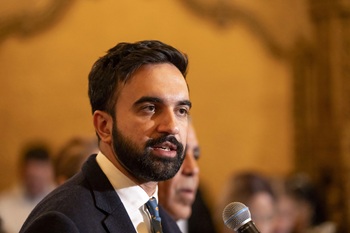
Nearly 900,000 New York City homeowners woke up last week to find their names and addresses on a publicly searchable city database — flagged as potential targets of Mayor Zohran Mamdani's new luxury home tax. Seventeen thousand of them also received official notices giving them one month to prove they didn't owe the government more money.
On Monday, a Staten Island Supreme Court justice shut the whole thing down.
Justice Wayne Ozzi issued a temporary restraining order blocking enforcement of the pied-à-terre tax, ordering the city to take down the database and barring it from enforcing the one-month deadline it had slapped on homeowners.
The tax targets second homes valued at $5 million or more — Mamdani's signature class-warfare play, branded under the "Tax the Rich" slogan that got him elected. The problem, according to the lawsuit, is that the city botched the rollout so badly it managed to ensnare hundreds of thousands of homeowners who don't even qualify.
Attorney Randy Mastro, representing a group of homeowners challenging the tax, didn't mince words outside the courthouse. "The city screwed this up," Mastro said. "Got it wrong. Stop the train and make them do it over."
Mastro argued the city published personal information for nearly 900,000 homeowners without verifying whether they actually fell under the tax — effectively doxxing them. "This is ludicrous. It is not right," he told the court. He added that "the city is to bear the burden" of proving who owes the tax, not the homeowners. "They didn't do their homework."
The plaintiffs include Rachel O'Brien, Carmine Morano — father of City Councilman Frank Morano — and Simon Hedley, a Chelsea resident who described himself as a Mamdani supporter. When even the mayor's own voters are suing him, the policy might have a credibility problem.
Constitutional law attorney Jonathan Turley weighed in on the ruling's broader implications, noting the legal fragility of the tax scheme itself. Justice Ozzi scheduled a follow-up hearing for the end of the month, meaning the city has to sit on its hands while the court decides whether the whole structure passes constitutional muster.
Mastro called the court's decision "a very good day for all New York City homeowners" — not just the wealthy ones Mamdani was targeting. Because once a city establishes the precedent that it can publish your financial details first and verify later, the $5 million threshold is just a starting line.
Mamdani built his mayoralty on the idea that New York's problems could be solved by squeezing the people who own the nicest apartments. A judge just pointed out that you still have to follow the law while you're doing it.
The next hearing is at the end of the month. The database is down. The deadline is frozen. The slogan, however, remains fully operational.