

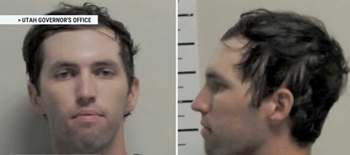
A Utah prosecutor got caught running his mouth to reporters about ballistics evidence in the Charlie Kirk murder case. Tyler Robinson's defense team saw their opening and lunged for it — demanding the court strip the death penalty entirely as punishment for the state's loose lips.
The judge said no.
Judge Tony Graf ruled Friday that Deputy Utah County Attorney Christopher Ballard violated a pretrial publicity order by discussing an inconclusive ballistics report with media outlets this spring. Ballard didn't just clarify the report — he went further, referencing the overall strength of the state's case against Robinson. Graf found him in civil contempt of court, ruling that Ballard's comments "possessed a substantial likelihood of materially prejudicing the proceedings by communicating the prosecutor's assessment of the defendant's guilt."
That's a legitimate problem. Prosecutors don't get to preview their case on cable news. But Robinson's attorneys weren't interested in a proportional remedy. They wanted the whole death penalty thrown out — the ultimate sanction for what amounts to a spokesman who let slip too many details.
Graf wasn't buying it. "The court finds that striking the death penalty is grossly disproportionate to the misconduct and legally unavailable in this civil contempt framework," he said. Instead, he ordered expanded jury selection procedures to screen out anyone tainted by the pretrial publicity and directed that Robinson's defense be reimbursed for the costs they incurred bringing the contempt motion.
A measured ruling. The prosecutor pays a price. The defense gets what it's actually entitled to. And the most serious charge stays on the table for the man accused of assassinating a 31-year-old political activist with a single rifle shot to the neck.
Charlie Kirk, founder of Turning Point USA and one of the most prominent young voices in the conservative movement, was killed on September 10, 2025, while speaking at an outdoor campus debate at Utah Valley University in Orem, Utah. A sniper positioned on a rooftop approximately 142 yards away fired the fatal shot around 12 p.m. Mountain Time. University officials had planned for roughly 600 attendees. More than 3,000 showed up.
The shooter jumped from the roof and fled. Tyler James Robinson, then 22, surrendered to a local sheriff's office the following day. He was charged on September 16 with aggravated murder, felony use of a firearm, obstruction of justice, witness tampering, and committing a violent act in the presence of a child. Prosecutors announced they would seek the death penalty, alleging a politically motivated attack.
Robinson, now 23, from Washington, Utah, has been awaiting trial ever since. A five-day preliminary hearing is scheduled to begin July 6, where prosecutors must present enough evidence for Judge Graf to find probable cause and send the case to trial.
The defense strategy here is worth noting. Robinson's lawyers didn't argue that Ballard's contempt was harmless — they argued it was so damaging that the only remedy was eliminating capital punishment from the case entirely. That's not a legal argument about proportionality. That's a strategic play dressed up as a fairness concern.
Graf saw through it. The expanded jury selection process addresses the actual harm — potential bias in the jury pool from pretrial publicity. It doesn't hand Robinson a sentencing discount because his prosecutors employed a spokesman who treated a gag order like a suggestion.
Utah Valley University itself came under scrutiny after the shooting for lacking several standard public safety measures. Campus police didn't fly drones to monitor rooftops. They didn't coordinate with local law enforcement to secure the outdoor venue. The courtyard where Kirk spoke was surrounded by tall buildings, leaving him exposed. A review of campus security practices was expected to begin in 2026.
None of those failures belong to Robinson's defense column. None of them change what prosecutors say happened on that rooftop.
The preliminary hearing on July 6 will be the first time the public sees the prosecution's full evidentiary hand. Until then, one thing is settled: the man accused of killing Charlie Kirk still faces the possibility of the ultimate penalty. A prosecutor's bad judgment with reporters didn't change that. The defense asked the court to turn a contempt violation into a get-out-of-death-row card.
The court handed them an expanded jury questionnaire instead.