

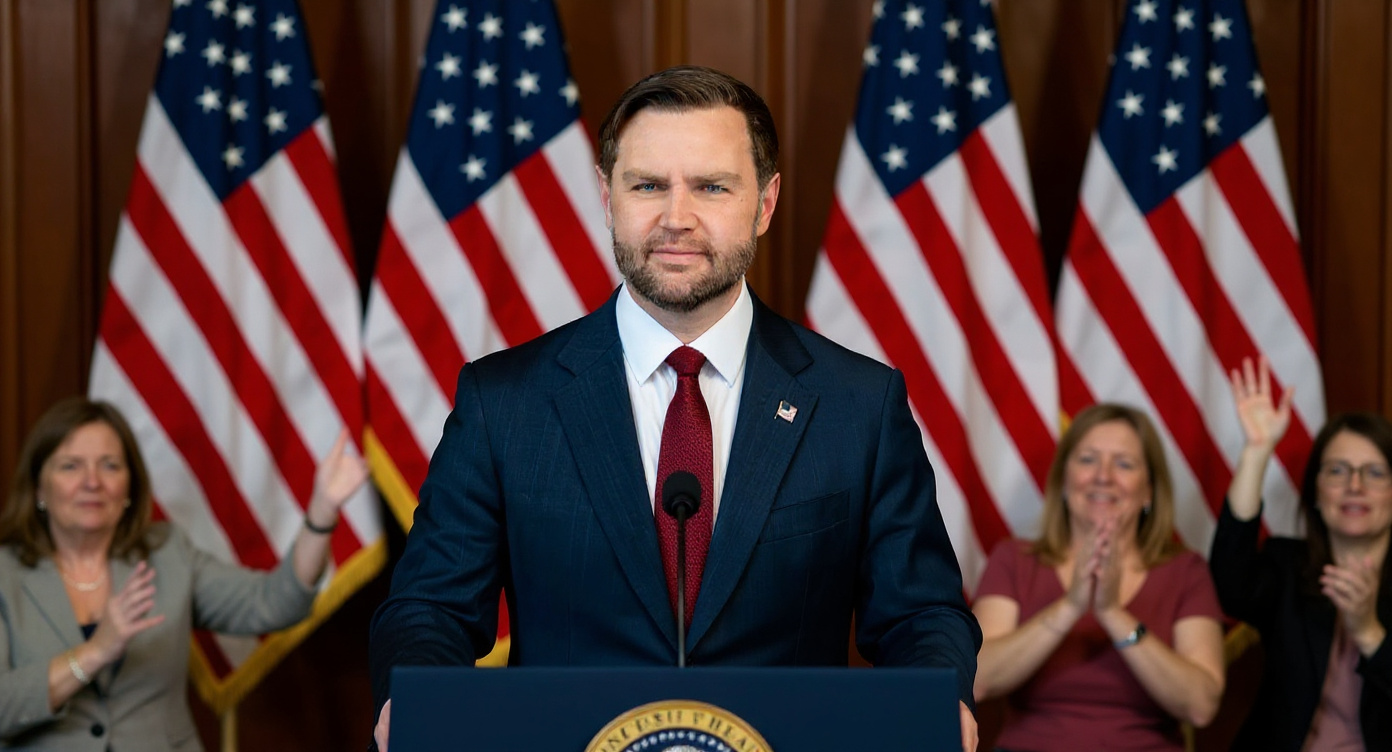
In the last five months, Vice President JD Vance has traveled to eight states for eleven campaign-type events. He's headlined twenty-five fundraisers. He's raised more than $60 million for the Republican National Committee. And he turned down a trip to Iowa because he thought it would look too much like a presidential campaign.
That last part is worth sitting with for a second. A politician who deliberately avoided a swing state because he didn't want people to think he was running for a higher office. In Washington, that qualifies as an endangered species.
Vice President Vance has become the GOP's head messenger and cheerleader heading into the 2026 midterms, with the White House political team mapping out competitive districts and deploying him accordingly. His operation has been coordinating with the White House for months. An RNC official confirmed to the Caller that Vance has headlined those twenty-five fundraisers since becoming the party's finance chair — making him the first sitting vice president to hold that title.
The numbers tell the story. The RNC ended May with $125.5 million cash on hand after raising $14.8 million in the month alone. Vance's fingerprints are on a significant chunk of the $60 million total he's brought in. He's made stops in North Carolina, Ohio, Wisconsin, Michigan, and Iowa — states where House and Senate races will determine whether the Trump agenda survives past 2026.
"There's a realization that he's a younger face who articulates domestic issues in a way that resonates and complements the president's style," a source close to the administration told the Daily Caller. That's the diplomatic version. The blunt version is that Vance can go into a purple district, talk about groceries and fentanyl and factory closures, and not make the conversation about himself.
Naturally, the 2028 question keeps coming up. On CBS Sunday Morning on June 14, Vance addressed it directly. He didn't declare anything. He said he'd think about it after the midterms and that his wife Usha would be part of the conversation. He noted that President Trump would be "very supportive" of whatever he ultimately decides. Sources close to Vance told the Washington Post that his decision will be heavily influenced by personal timing — his fourth child, a boy, is due in late July.
"Usha and I will absolutely sit down and talk about what comes next," he said during the interview. Not exactly the battle cry of a man measuring the Oval Office drapes.
The people insisting this is all a calculated audition are missing something. The whole point of Vance's midterm blitz is that there are actual midterm races to win right now. The House majority is razor-thin. The Senate map is friendlier than 2024 but far from guaranteed. If Republicans lose the House, every legislative priority — from the tax bill to border funding — hits a wall. And if they lose both, impeachment proceedings for President Trump will begin immediately. Vance seems to understand that winning in November 2026 is the prerequisite for anything that comes after.
Compare that to the Democratic bench. The party that lost the White House and the Senate is currently running internal focus groups about "messaging frameworks" and arguing over whether to call themselves progressive or moderate. Their most visible national figures are governors who spend more time on cable news than in competitive districts. Nobody on their side is doing the blocking and tackling that Vance is quietly grinding out in swing states.
The cynics will say every vice president who campaigns for the midterms is really campaigning for themselves. Maybe. But the RNC's $125.5 million war chest doesn't care about motive. The Republican candidate in a toss-up Wisconsin House district doesn't care why Vance showed up — just that he did, and that the fundraising email his team sent afterward raised six figures.
Vance turned down Iowa to avoid the appearance of self-promotion. He's crisscrossing the country for candidates who aren't him. He's raising money at a pace the RNC hasn't seen from a sitting VP.
In politics, that used to be called doing your job. It's just been so long since anyone actually did it that we forgot what it looks like.