

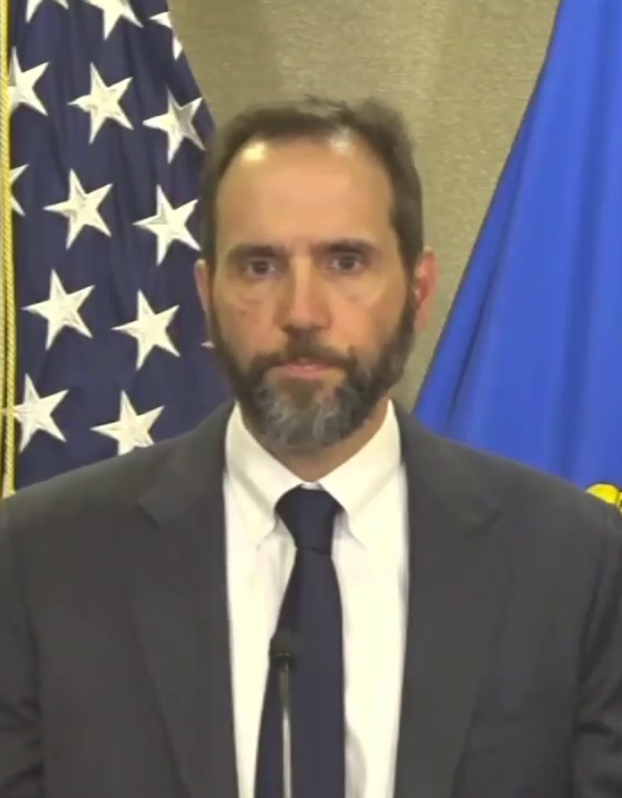
House Judiciary Committee Chairman Jim Jordan sent a criminal referral for former Special Counsel Jack Smith to the Department of Justice on Tuesday. The accusation: Smith lied to Congress under oath about whether his team accessed the text messages of over 40 members of Congress.
The man who spent years building cases against a president now needs to worry about his own.
Jordan's referral centers on Smith's congressional testimony about "toll records" — telephone records his office subpoenaed during its investigations. According to the House Judiciary Committee, Smith told lawmakers under oath that the records his team requested did not include the content of members' messages. The committee says that wasn't true. Jordan's letter to Acting Attorney General Todd Blanche lays it out directly: "This information calls into question the completeness and accuracy of statements that Mr. Smith made under oath to the Committee regarding his team's access to the content of Members' text messages."
That's not a vague accusation. It's a specific claim that a former Special Counsel lied under oath about the scope of surveillance his office conducted on sitting members of Congress. Over 40 lawmakers' communications were allegedly accessed.
The Democrat on the Committee, Rep. Jamie Raskin, who never met a criticism of President Trump he didn't like, tried his best to defend Smith's actions. "With today's referral of Jack Smith to DOJ, Chairman Jordan and the Republican Congress have embarrassed themselves again in this investigation," Raskin said. He added: "Jack Smith was clear and consistent in his testimony, and he told the truth."
Raskin then offered what might be the most creative defense of the year: "The Republicans fault Mr. Smith for not reading the minds of congressional investigators and for not volunteering information they didn't ask for. This is absurd. Mr. Smith may be telegenic but he is not telepathic."
That's a fun line. But the question isn't whether Smith can read minds. The question is whether he told the truth about what his team collected when he was asked directly, under oath. "Wishing that you had asked different questions while you had the opportunity to examine a witness is not a proper basis for a referral of a witness for criminal prosecution," Raskin added. Which would be a solid argument if the committee were complaining about questions that weren't asked. They're not. They're saying they asked directly and Smith gave false answers.
The referral now sits with Acting Attorney General Todd Blanche, who will decide whether to pursue it.
Smith's office pursued two federal cases against Donald Trump — one over classified documents, one over January 6. Both were dropped last year after which Smith resigned. He left as a polarizing figure: hero to the left, political weapon to the right. But "lied under oath about surveilling Congress" doesn't fit neatly into either narrative. That's just a problem.
The pattern is worth noticing. Smith's team requested records on over 40 sitting lawmakers. When asked about it, Smith apparently described those records in a way the committee now says was misleading. If that's true, it means the special counsel's office was collecting congressional communications and then understating what it had when Congress came asking.
If Raskin is right and Smith told the truth, the referral dies quietly and Jordan gets called a partisan. If the committee is right and Smith misrepresented the scope of his own subpoenas under oath, then the former special counsel has a legal problem that no amount of "telegenic" charm is going to fix.
Either way, the referral is on Blanche's desk. Smith spent three years deciding who to prosecute. Now someone else gets to make that call about him.