

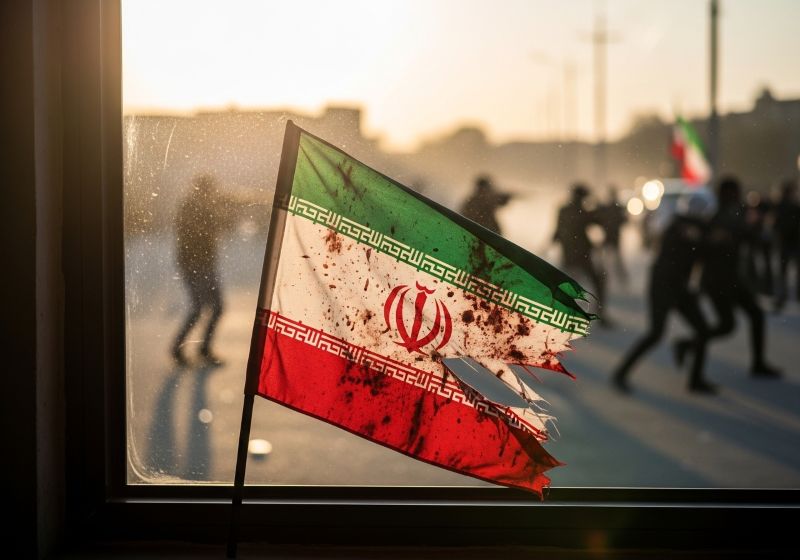
On March 15th, Iran’s Foreign Minister Abbas Araghchi sat down with CBS News and delivered a defiant message: “No, we never asked for a ceasefire, and we have never asked even for negotiation. We are ready to defend ourselves as long as it takes.”
On March 22nd, he told Japanese media: “We do not accept a ceasefire. We want a complete, comprehensive, and sustainable end to the war.”
What Araghchi did not mention in either interview: Iranian intelligence operatives had already reached out to the CIA through a third country’s intelligence service to signal openness to discussing terms for ending the conflict. Oman’s Foreign Minister — who ran the pre-war US-Iran back channel — had directly called Araghchi to urge de-escalation. Araghchi told him Iran was “calling for peace” and expressed “openness to any serious efforts that contribute to stopping the escalation.” US envoy Steve Witkoff and Araghchi have reactivated direct communication. Turkey’s foreign minister has assessed that Iran is “open to back-channel talks” even as no formal process is underway.
Iran is running two foreign policies simultaneously. One is for cameras. One is for survival.
What the Gap Reveals
The distance between Iran’s public posture and its private activity is not a minor diplomatic inconsistency. It is a precise measure of how cornered the regime is.
A government negotiating from strength does not need to deny it wants negotiations while secretly pursuing them. A military that is genuinely capable of defending itself does not have its intelligence services quietly contacting the CIA through intermediaries. A regime that truly believes it can outlast the American and Israeli campaign does not have its president setting ceasefire terms — recognition of Iran’s legitimate rights, payment of reparations, firm international guarantees — while its foreign minister tells Western media the subject doesn’t exist.
Iran entered this conflict already weakened by years of sanctions, the 2025 twelve-day war with Israel, and the collapse of its allied proxy forces in Lebanon and Gaza. Since February 28th, the US-Israel campaign has destroyed its nuclear sites, sunk its navy, killed its Supreme Leader, and eliminated its intelligence minister, IRGC commander, Basij commander, defense minister, and army chief. Missile launches are down 90 percent. Iran’s air defenses are 80 to 90 percent degraded.
The regime that told the world it would defend itself as long as it takes is watching its military infrastructure disappear and its command structure get decapitated — and quietly asking Oman to make some calls on its behalf.
Trump’s Framing
Trump has been direct about where the war stands. On March 14th he said the US is “way ahead of schedule” and has “done more damage than we thought possible, even in the original six-week period.” On March 20th he stated flatly: “I think we’ve won. From a military standpoint, they’re finished.” He said the US could end operations “right now” but is continuing so Iran can “never rebuild.”
Within the same hour he floated winding down operations, he also threatened to obliterate Iran’s power plants if Hormuz wasn’t opened within 48 hours. That is not the behavior of a commander managing a stalemate. That is the behavior of a commander who knows he holds all the cards and is deciding exactly when and how to collect.
The Endgame
Iran’s ceasefire conditions — reparations, recognition of legitimate rights, international guarantees against future aggression — are what a losing side asks for when it needs to frame a surrender as something else. No country that has genuinely won a conflict pays reparations. No military that has preserved its strength asks for guarantees against future attack. These conditions are face-saving language for a regime that needs to tell its own population it didn’t simply lose.
The regime is not winning. It is managing its exit. The public defiance is for domestic consumption — for the hardliners who need to believe Iran never surrendered. The back-channel activity is the reality.
Trump said it would be short. Day 23 looks like he was right.