
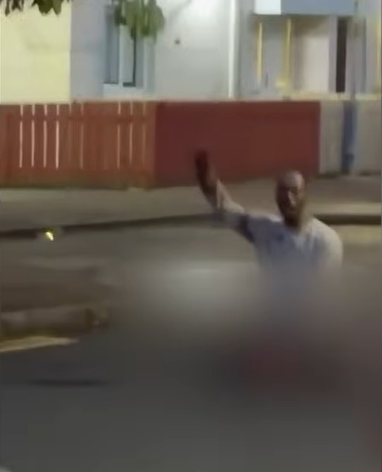
On June 8, 2026, a man named Stephen Ogilvie — in his forties, walking on Kinnaird Avenue in north Belfast — was attacked with such savagery that he lost his left eye, suffered severe damage to his right eye, and sustained deep lacerations across his head, face, neck, and back. The suspect, 30-year-old Sudanese national Hadi Alodid, had been charged with attempted murder, knife possession, and threats to kill an NHS radiographer.
The BBC's response? An internal memo expressing "solidarity with colleagues who may feel particularly vulnerable or fearful at this time."
Not solidarity with Ogilvie, mind you. Not with his family. Not with the people of Belfast who watched a man nearly get decapitated on a residential street. The solidarity was reserved for BBC staff who might feel uncomfortable about the public reaction to what one of their protected categories had done.
Jack Whyte, the BBC's Chief Technology Officer, sent the message condemning "hatred, intimidation, and violence in all its forms." Which sounds noble until you realize the "violence" he's apparently most worried about isn't the kind where someone saws at a man's skull — it's the kind where British people get angry about it online.
Alodid's path to Belfast reads like a brochure for every broken asylum system in the Western world. He traveled from Sudan to Paris to Dublin to Belfast, arriving in February 2023. He claimed asylum the same day he arrived. By September 2023, he'd been granted leave to remain in the United Kingdom until 2028. Seven months from arrival to a five-year stamp.
According to detective testimony, Alodid told police after the attack: "I've killed someone, I don't know if they are dead." He also allegedly told medical staff, "I will kill you." These aren't the words of someone who stumbled into a misunderstanding. These are the words of someone who knew exactly what he was doing and had no intention of stopping.
But the story the BBC chose to tell was something different entirely. As one BBC source put it: "The BBC offered solidarity to foreign staff but not to native Brits." The framing flipped the attacker into the background and elevated the feelings of people who weren't attacked, weren't hurt, and weren't anywhere near Kinnaird Avenue that day.
Fran Unsworth, a former BBC news director, has spoken about the internal culture that makes this kind of editorial choice inevitable. "I would actually say it drove me out," she said — describing a newsroom where the pressure to protect certain narratives outweighs the obligation to report facts.
Alex Whyte, the sister of a separate victim named Rhiannon Whyte, described feeling "sick, disgusted and completely let down" by the BBC's handling of cases like these. She's not alone. The pattern is familiar enough to have its own rhythm: horrific crime, brief factual reporting, then a pivot to worrying about "backlash" against the demographic the attacker belongs to.
Meanwhile, the charity "Heard" — which has received £4.5 million since 2021 from left-leaning foundations — works alongside entities like the Home Office's Research, Information and Communications Unit to shape how migration stories are framed in British media. The infrastructure isn't hidden. It's funded, organized, and operational.
The PSNI's C3 intelligence branch handled the case. Alodid sits in custody. Stephen Ogilvie is learning to live without depth perception, if he can see at all.
A man nearly lost his head on a public street. The national broadcaster's first instinct was to check on the feelings of people who share the attacker's background. When that's the reflex, it's not bias anymore. It's policy.