

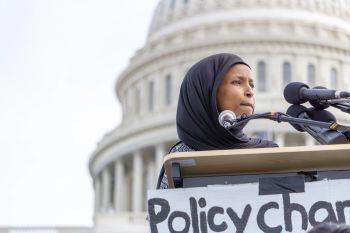
Somewhere in the federal government's evidence files for the largest pandemic-era fraud case in American history sits a collection of emails connected to Rep. Ilhan Omar. The case involves $250 million in stolen food aid — money that was supposed to feed children during COVID lockdowns.
Now a GOP lawmaker wants the rest of her records.
The fraud scheme centers on Feeding Our Future, a Minnesota-based nonprofit that was supposed to distribute federal food assistance to children through the USDA's pandemic nutrition programs. Instead, according to prosecutors, the organization became a pipeline for one of the most brazen theft operations the federal government has ever prosecuted. Seventy people were charged. Millions were laundered through shell companies. And the money — $250 million of it — went to luxury cars, real estate, and personal bank accounts instead of kids' meals.
What makes this week's development significant is the surfacing of emails tying Rep. Ilhan Omar directly to figures in the case. As reported by United Voice and America's Voice News, these communications place the Minnesota congresswoman in contact with individuals connected to the fraud network. The specifics of what those emails contain are now the subject of intense congressional interest.
Rep. Omar has represented Minnesota's 5th Congressional District since 2019 — the same district where Feeding Our Future operated. The nonprofit's founder, Aimee Bock, was convicted earlier this year after a trial that laid bare the sheer scale of the theft. Prosecutors demonstrated that fake meal sites were claiming to serve thousands of children per day at locations that couldn't hold more than a few dozen people. Some sites didn't exist at all.
A Republican lawmaker — citing the newly surfaced emails — has formally demanded Omar's records related to the case. The demand follows a fresh fraud arrest connected to the scheme, suggesting the investigation is still expanding rather than winding down. When $250 million disappears from a child nutrition program and the evidence trail leads to a sitting member of Congress's inbox, congressional oversight isn't optional. It's the bare minimum.
Omar's office has previously dismissed questions about connections to the case. The standard defense has been that constituent services naturally involve communication with local nonprofits, and that contact alone doesn't imply involvement in criminal activity.
That's technically true. Members of Congress interact with local organizations all the time. But the scale here matters. This isn't a nonprofit that misreported some numbers on a grant application. This is a $250 million fraud — the largest COVID-era theft case the DOJ has prosecuted — and the emails in question surfaced not from a routine FOIA request but from the federal criminal investigation itself. The distinction between "routine constituent contact" and "evidence in a federal fraud case" is one that investigators, not press offices, get to draw.
The broader pattern is hard to ignore. Minnesota's pandemic food programs became a magnet for fraud precisely because oversight was minimal and money was flowing fast. The federal government pumped billions into emergency nutrition assistance with almost no verification infrastructure. Feeding Our Future exploited that gap systematically — and the question Congress is now asking is whether anyone in a position of power helped keep that gap open.
The emails exist. The records request is formal. The investigation is still making arrests.
Whatever those emails say, we're going to find out. The only question is whether we find out from investigators or from Omar's office — and so far, only one of those two has been cooperating.