

The Wall Street Journal just compared Hollywood to Detroit. Not metaphorically. Not as a warning. As a diagnosis.
“The nightmare scenario is playing out in Los Angeles,” the Journal wrote, “where a century-old entertainment economy is evaporating with no signs of a turnaround on the horizon.”
No turnaround on the horizon. Couldn’t have happened to a nicer industry.
Employment in Los Angeles entertainment is down 30% since 2022, according to the Labor Department. Behind-the-camera workers have logged 36% fewer hours.
That’s not a dip. That’s not a correction. That’s an industry hollowing out from the inside while its biggest stars lecture the rest of us about equity and climate change from their Malibu compounds.
The WSJ put the knife in deeper: “Many worry Hollywood will soon resemble Detroit after the decline of the auto industry, with corporate headquarters still located here, but little of the actual work.” Corporate headquarters still there, but the jobs gone. The executives keep their offices. The grips, the electricians, the set builders, the makeup artists — they get to update their resumes.
Actor Noah Wyle — the guy from The Pitt and ER before that — showed up to testify before Congress in Burbank. He called it “a near cratering of our once-thriving industry.” When the TV doctor is in Washington begging for help, the patient is already flatlined.
Productions aren’t dying. They’re leaving. Canada, the UK, Australia — anywhere that offers cheaper labor without the California premium of regulations, taxes, and union demands that make filming in Los Angeles feel like building a house with a committee of 47 people who all hate each other. Even within the US, production has scattered to New York, Chicago, and Georgia. Georgia. The state Hollywood tried to boycott over an abortion bill is now eating their lunch.
The streaming bubble did what bubbles always do. After 2020, every tech company with a logo and a dream dumped money into content. Netflix, Amazon, Apple, Disney+ — they were all producing shows at a pace that made the old network system look like a hobby. For a brief, glorious moment, every aspiring screenwriter in Los Angeles could get a meeting. Then the streamers looked at their books and realized that 400 shows nobody watches is not, in fact, a business model.
By 2024, they started cutting. Fewer new shows. Shorter seasons. Tighter budgets. The writers who survived the 2023 strike came back to discover there was less work to strike about.
And here’s the part nobody in Hollywood wants to say out loud: people stopped watching their stuff. Not all of it. But the audience has shifted. Sports, TikTok, YouTube — content made by individuals and small companies without guild minimums, residual structures, or a Chief Diversity Officer approving the casting. A teenager with a ring light and a hot take is pulling numbers that would make a mid-tier Netflix show embarrassed.
The auto industry didn’t collapse because people stopped needing cars. It collapsed because Detroit refused to adapt while competitors built better products cheaper and faster. Hollywood is running the same playbook. The product got worse, the costs got higher, the competition got hungrier, and the executives responded by making more movies about climate anxiety and gender identity that nobody asked for and nobody watched.
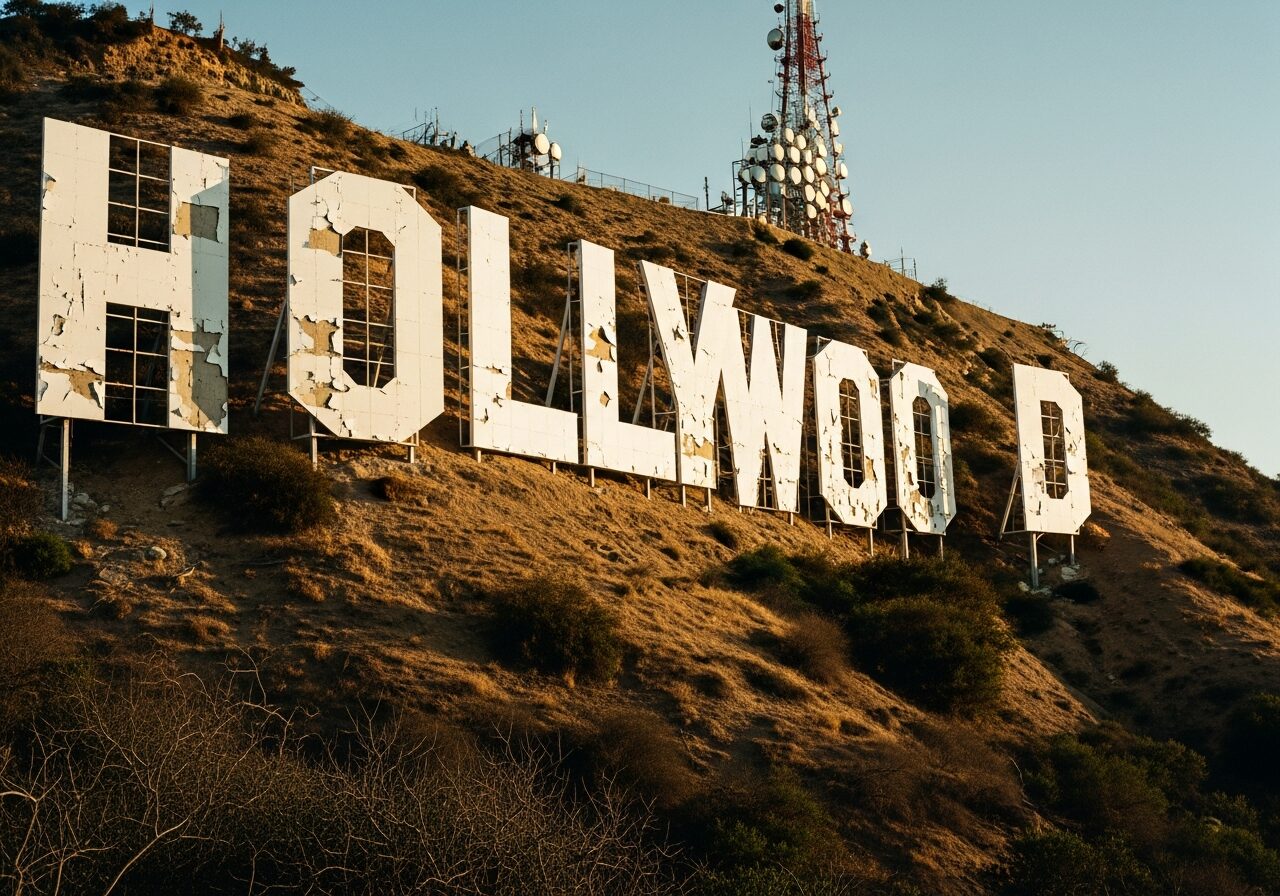
Detroit kept the headquarters. The factories went to Mexico and Japan. Hollywood will keep the sign on the hill. The work is already halfway to Vancouver.
We’d say “thoughts and prayers” to all the industry people who spent the last decade telling middle America we were racist, backward, and clinging to our guns and religion. But we’re too busy watching YouTube.