
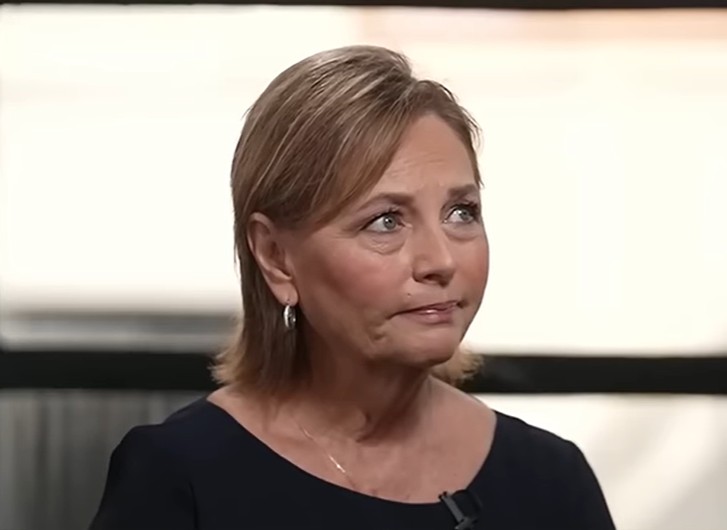
Sen. Darline Graham of South Carolina was sworn in earlier this month. She's been on the job for a few weeks. And she's already publicly defying Senate Majority Leader John Thune over election integrity legislation that the base has been demanding for years.
Some people take longer to find their spine. Graham brought hers from home.
The freshman senator — who fills the seat left by her late brother, Sen. Lindsey Graham — issued a direct statement backing President Trump's push for the SAVE America Act. "President Trump is 100% correct," Graham said. "The SAVE America Act is top priority. I will stay here as long as necessary to get it passed and signed into law."
The SAVE America Act, formally designated H.R. 7296 in the 119th Congress, does two things that shouldn't be controversial in any functioning democracy: it requires documentary proof of U.S. citizenship to register to vote in federal elections, and it mandates photo ID for in-person voting. That's it. Prove you're a citizen. Prove you're you. The entire opposition argument boils down to calling those requirements oppressive, which tells you everything about who benefits from not having them.
The problem is the Senate math. Republicans hold 53 seats, but under current filibuster rules, they need 60 votes to advance the bill. That means getting seven Democrats to support proving citizenship before voting — a threshold that might as well be seven hundred given the current caucus.
Thune's approach has been to manage the legislative calendar the way Senate leaders always do: prioritize what's passable, shelve what isn't, and avoid floor fights that end in embarrassing vote counts. It's a reasonable strategy if your goal is avoiding bad headlines. It's a terrible strategy if your goal is actually passing the legislation 74 million people voted for.
Graham isn't alone in pushing back. Sens. Mike Lee, Rick Scott, and Ashley Moody have all signaled support for forcing the issue, according to 100 Percent Fed Up and WLT Report. The intra-party pressure is building in a direction that Thune can either lead or get dragged by.
The standard objection from the left is that voter ID requirements disproportionately burden minority communities. This is the same argument that assumes minority voters are uniquely incapable of obtaining a photo ID — a premise so condescending it would be called racist if a Republican said it. Thirty-six states already require some form of ID to vote. India, with 900 million voters and widespread poverty, manages to pull it off. The "burden" argument isn't about logistics. It's about preserving a system where verification is optional.
What makes Graham's stand interesting isn't just the policy. It's the signal. She's been a senator for weeks, not years. She doesn't have decades of institutional loyalty to Thune or the leadership structure. She showed up with a mandate from a state that sent her specifically because they trusted the Graham name to fight, not to manage.