

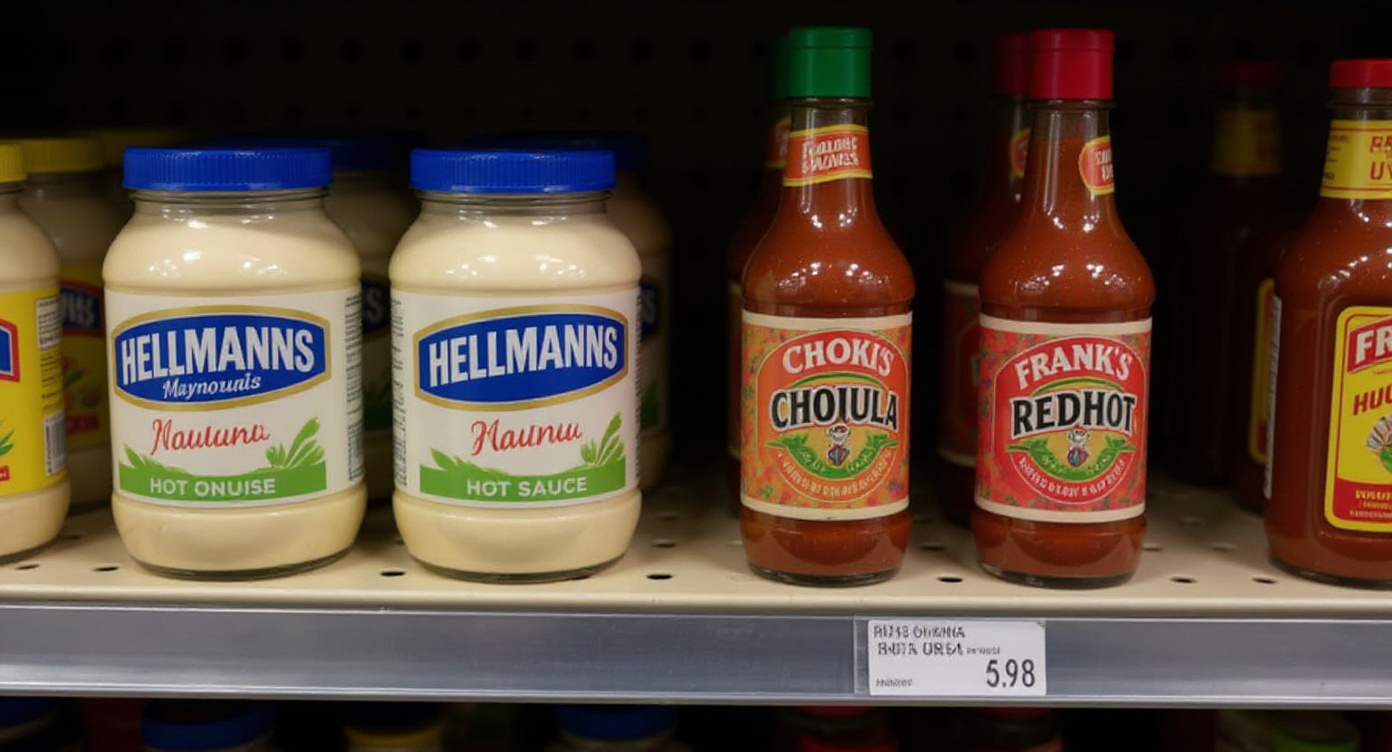
Senator Elizabeth Warren of Massachusetts took to social media on October 13 to sound the alarm on a threat she believes is lurking in your refrigerator. "Hellmann's mayo. McCormick spices. Cholula hot sauce. Frank's RedHot," she wrote. "What do these products have in common? One company could soon control them all."
The woman who tried to break up the banks is coming for your condiment shelf.
Warren's target is a proposed $45 billion merger between McCormick & Company and Unilever, the parent company of Hellmann's mayonnaise. Her concern, as outlined in the post, is that the combined entity would control too much of the condiment market and — her words — "could increase YOUR grocery prices." The capitalization of "YOUR" is hers, not ours. She wanted to make sure you felt personally threatened by the mayonnaise situation.
The numbers she's worried about: Hellmann's holds 46.7 percent of the U.S. mayonnaise market. McCormick controls an estimated 40 to 60 percent of the retail spice market. Frank's RedHot and Cholula together account for roughly 30 percent of hot sauce sales. Those are real market shares. They're also market shares in mayonnaise, spices, and hot sauce — three product categories where the average American spends a few dollars a month.
Warren has built an entire political identity around the word "monopoly." Banks were monopolies. Tech companies were monopolies. Grocery chains were monopolies. Landlords were monopolies. The list expands every election cycle, and the common thread isn't market concentration — it's whatever industry makes a useful prop for the next fundraising email. Adding condiments to the roster doesn't signal a serious policy concern. It signals that the list ran out of industries people actually worry about.
The merger itself is a standard corporate consolidation in the consumer packaged goods space. McCormick makes spices and hot sauce. Unilever makes mayonnaise and about four hundred other household products. Combining them creates a bigger company that sells things you put on sandwiches. The Federal Trade Commission will review the deal, as it does with any merger of that size, and will assess whether the combination actually harms consumers through higher prices or reduced competition. That's the process. It exists. It doesn't need Elizabeth Warren posting ingredient lists on social media to function.
The argument that a merged company "could" raise prices assumes the combined entity would face no competition — that store brands, Kraft, Duke's, Tabasco, and every other condiment manufacturer would simply vanish. Hellmann's has 46.7 percent of the mayo market. That means 53.3 percent belongs to someone else. McCormick has 40 to 60 percent of spices. That means at least 40 percent doesn't. Market share isn't a monopoly. It's market share.
Warren's real product has never been policy. It's the performance of concern — the urgent tone, the list of brands you recognize, the implication that someone powerful is scheming against you at the grocery store. First it was Wall Street. Then it was Amazon. Then it was Kroger. Now it's Hellmann's. The pattern isn't a senator identifying genuine threats to consumers. It's a senator who needs a new villain every quarter.
The $45 billion deal will go through the regulatory process whether Warren posts about it or not. The FTC will review the market data. Economists will model the price effects. None of that requires a senator from Massachusetts to explain that Cholula and Frank's RedHot are both hot sauce.
Hellmann's mayonnaise has been on American shelves since 1913. It survived two world wars, the Great Depression, and the entire history of federal antitrust law. It'll survive Elizabeth Warren's Twitter feed.