

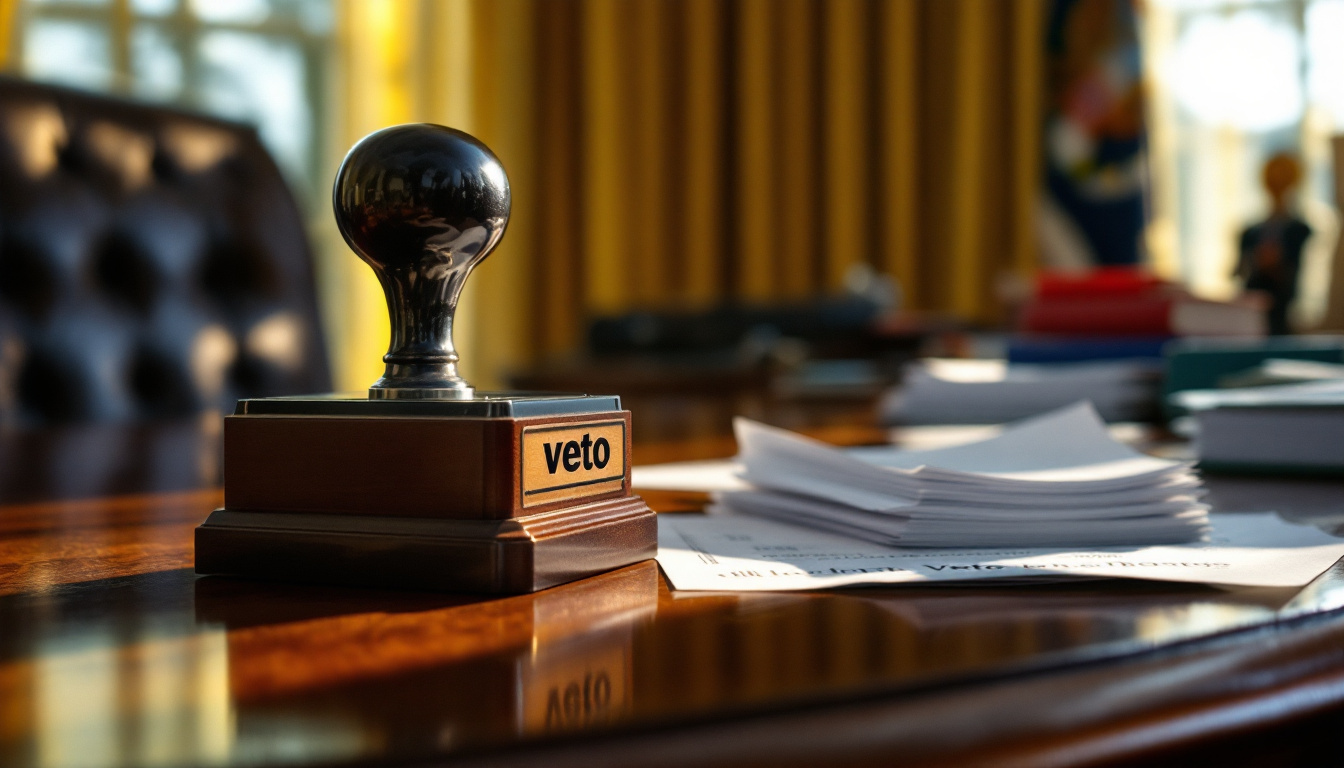
Before the final votes were even counted on Tuesday night, President Trump sat down with CBS News correspondent Robert Costa and explained exactly what happens if Democrats take Congress. "I have the ultimate power," Trump said. "It's called 'veto.'"
He wasn't bluffing. He was reading from a playbook he'd already written.
The interview is the most important post-election statement nobody in the mainstream press wants to amplify. While every other Republican was busy assigning blame and scheduling retreat conferences, Trump was laying out a specific, constitutionally grounded strategy for governing against a hostile legislature. He even embraced a new nickname: "Mr. Veto."
"Historically, you veto for a couple of months and then they come and say, 'We've got to make a deal,'" Trump told Costa. That's not bravado. That's how the veto power has actually functioned in every modern divided government. Congress passes bills. The president vetoes them. Eventually, the side with less leverage — the side that needs a two-thirds majority to override — comes to the table.
But the veto pen is only half the strategy. Trump pointed to a Supreme Court ruling that most Americans haven't heard of but that reshapes the entire balance of power between the presidency and the bureaucracy. "We won the Slaughter case and the Slaughter case gives the president tremendous powers," Trump said.
He's referring to Trump v. Slaughter, the 6-3 Supreme Court decision handed down on June 29 that overturned a precedent dating back to 1935. The case involved Rebecca Slaughter, a former FTC commissioner whom Trump removed from her position. The ruling confirmed that the president has broad authority to fire heads of independent agencies — a power the administrative state had insulated itself from for nearly a century. Russell Vought, the Office of Management and Budget Director, and White House Deputy Chief of Staff Stephen Miller have been operationalizing that ruling across the executive branch for months.
The Democratic theory of the midterms was straightforward: win 435 House seats and 35 Senate seats worth of leverage, then grind the Trump agenda to a halt through legislation. The Trump theory is simpler: you can't legislate past a veto, and you can't staff the bureaucracy against a president the Supreme Court just gave firing authority to.
Trump also made clear he wasn't conceding the results before they arrived. "If you remember, about 30, 40 days ago, people were saying it's going to be a big loss," he said. "I did 29 days, 33 of these things, and they were all massive rallies." His assessment heading into election night: "We'll have to see. Will we win? We have a good chance. But we're not going to be embarrassed."
The assumption in Washington is that a new congressional majority sets the agenda. That's true when the president plays defense. Trump's entire career — in business, in his first term, in his second — has been built on the opposite instinct. A hostile Congress doesn't change the executive's constitutional authority. It changes the negotiating dynamic.
"The presidency, our presidency, is considered a strong presidency," Trump told Costa. "You can do a lot."
Democrats spent two years campaigning for a congressional majority. The Supreme Court handed Trump something worth more: a 6-3 ruling and a veto pen with no expiration date.