

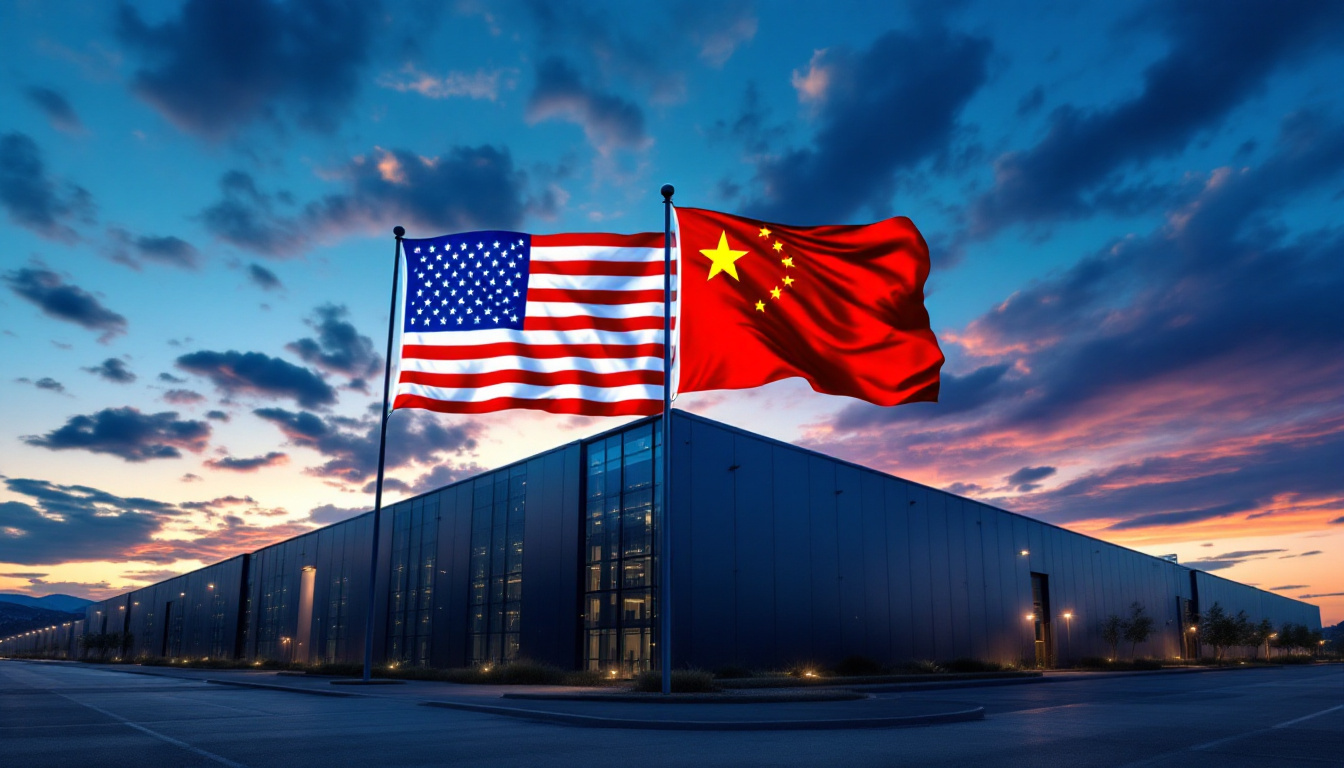
Seventy-one percent of Americans now say they oppose data center construction in their communities, according to a recent Gallup poll. That's a staggering number for infrastructure most people hadn't heard of two years ago. Somewhere in Beijing, somebody's smiling.
Because that opposition didn't grow organically. It was cultivated. By Beijing.
In June 2026, OpenAI revealed it had shut down a network of China-linked accounts that were using ChatGPT to generate anti-data-center content targeting American communities. Ben Nimmo, OpenAI's Head of Threat Investigations, put it bluntly: "This was not a case of an influence operation creating a debate. The debate existed already. This was an influence operation from China trying to interfere in it."
That's the whole playbook in two sentences. Americans have real concerns about water use, energy costs, and grid capacity near proposed data center sites. Nobody's dismissing that. But the Chinese Communist Party identified those concerns and poured gasoline on them — amplifying local opposition through state-linked media outlets like China Global Television Network, China Daily, and the Global Times, and through covert social media operations designed to look like grassroots American activism.
A report from the Bitcoin Policy Institute laid out the strategy: "American citizens have legitimate concerns about water use, energy costs, and grid capacity, concerns that deserve serious local deliberation." The CCP's contribution was making sure those minor anxieties got amplified and pushed out to the masses prophetically.
The timing is not subtle. While Chinese operatives work to slow American AI infrastructure, the Chinese government subsidizes half of energy costs for some of its own domestic AI data-center operators. They're paying to build theirs faster while paying to make sure we don't build ours at all.
Xue Lan, a Tsinghua University professor who chairs China's national AI governance expert committee and serves as a counselor to the Chinese State Council, has been a central figure in Beijing's AI policy architecture. Zeng Yi, Dean of the Beijing Institute of AI Safety and Governance, operates in the same orbit. These aren't rogue academics. They're state-directed strategists working to ensure China leads the AI race — and the easiest way to win a race is to trip the other guy.
Quán Chāngpǔ, a retired Lieutenant Colonel and former Chinese officer who defected to the West, confirmed the pattern. He managed overseas operations for the CCP in the 1990s and says "the party entrusted them with the mission to slow down, disrupt or halt technological progress in the U.S." His assessment of the data center campaign: "Targeting the heart of the system and creating a contentious atmosphere in the U.S. benefits them." As for attribution, he didn't mince words: "PLA fingerprints are everywhere."
Some of the domestic infrastructure was already in place. Shanghai-based American businessman Neville Roy Singham has long been flagged by the U.S. Justice Department for his connections to CCP-aligned networks. In April, Senator Bernie Sanders hosted a Capitol Hill event amplifying anti-data-center sentiment — the kind of thing that plays perfectly into Beijing's strategy whether the Senator knows it or not.
Environmental groups raising "community impact" concerns about data centers might want to take a long look at who's signal-boosting their message and why.
House Energy and Commerce Chairman Brett Guthrie framed the stakes clearly: "The fact that Chinese Communist Party-backed entities and other foreign adversaries may be attempting to influence decisions related to American data center infrastructure puts into perspective how serious of a fight we are in."
Senate Intelligence Committee Chairman Tom Cotton went further. He acknowledged the legitimate local concerns — "Americans certainly have valid concerns about potential rising energy costs and strains on natural resources related to data centers" — but drew the line where it matters: we "can't allow any effort by foreign adversaries to extort these fears and undermine our technological development." Cotton added: "Maintaining America's AI advantage is vital to American economic strength, diplomacy, national security, and military power."
That's the part of this story that should keep you up at night. This isn't about server farms in Delaware. It's about whether the United States or China controls the next generation of artificial intelligence — the technology that will determine military superiority, economic dominance, and intelligence capability for the next fifty years. And right now, one side is building as fast as it can while running covert operations to make sure the other side argues itself into paralysis.
China subsidizes its own data centers. China runs influence operations against ours. And 71 percent of Americans have arrived at exactly the conclusion Beijing wanted them to reach.
That's not a coincidence. That's a strategy — and it's working.