

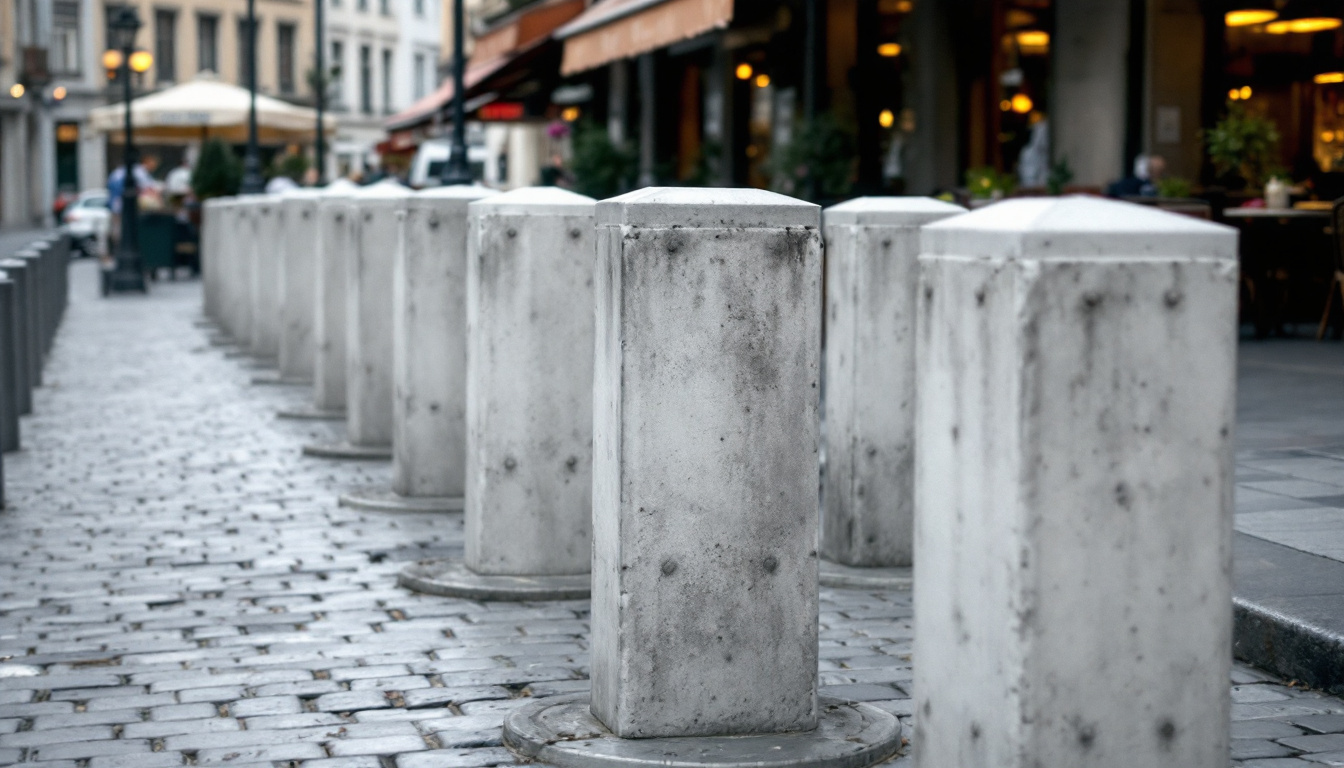
Fifteen military-grade barriers now block the four main entrances to Nottingham Beach — a seasonal outdoor market in the middle of England. The barriers are Husson H-Stop units, rated to halt a 3.5-tonne truck traveling at 30 mph. They were installed on the guidance of counter-terrorism officers from a multi-agency events safety advisory group working under the National Protective Security Authority.
Councillor Neghat Khan, the leader of Nottingham City Council, described the truck-stopping fortifications as an "additional safety measure." Event organizer James Mellors was equally reassuring. "It's not always about how things look," he told reporters, "it's about keeping people safe." Neither Khan nor Mellors specified what exactly the threat was. They just built the wall and moved on. They really don't want to have to answer why they were forced to put in these safety barricades.
The thing nobody in British officialdom will say out loud is the thing that made the barriers necessary. In December 2024, a vehicle-ramming attack at a Christmas market in Magdeburg, Germany killed 6 people and injured hundreds. In October 2025, a vehicle attack on a Manchester synagogue killed 3. This past weekend an Islamic terrorist used his car to murder people attending a Gay Pride parade in Germany. These aren't ancient history. They're the last eighteen months. And cities across Europe have quietly accepted that public spaces now require safety measures to protect the native populations against Islamic migrants they've brought in over the past decade.
AfD politician Ulrich Siegmund offered the observation that polite European officials won't. "Why do we need to protect Christmas markets?" he asked. "Go to Czech Republic, Poland." His point wasn't subtle. Countries that didn't adopt open-border immigration policies don't need to fortify their holiday shopping.
The phrase that keeps surfacing in European security circles is "diversity barriers." It's not an official government term — it's what planners and contractors call them, because the barriers exist to manage a threat that arrived alongside a specific policy choice. The term is so on-the-nose that you'd assume it was invented by critics, but it wasn't. The people building the walls named them.
Regular visitor Amanda Hose Hawley told reporters she understood the need. That's where this story lives now — not in outrage, not in political debate, but in quiet resigned acceptance. Concrete walls around the fish-and-chips stand. Anti-tank barriers at the entrance to a fake beach in the East Midlands. The permanent architecture of a problem no one is allowed to diagnose.